Wednesday, May 25, 2011

Clove Gillyflowers: A Botanical Ramble

As with our eviction from Eden (a botanical story in itself, it turns out), it all started with an apple. At a historical symposium recently, we were talking about an old apple orchard that survived on a historic homestead in Westminster, Colorado. Do you know the name of the apple?, I asked, and the answer led me into temptation.

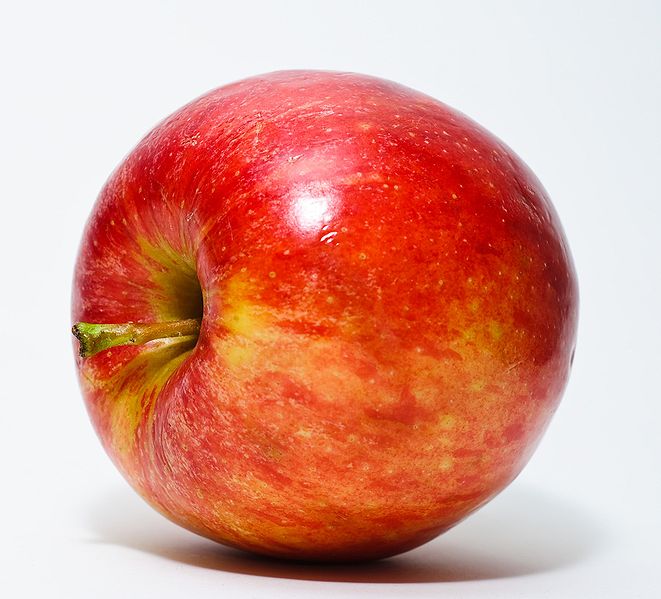
Apple image by Abhijit Tembhekar from Mumbai, India, source: Wikipedia.

"Sops-in-wine," I was told. Oddly, I had just read that very name in American Household Botany, a useful compendium of botanica I'm currently reading. But the name, sometimes known as "Sops-of-wine," was not applied (in the book) to heirloom apples. Off we go then!

What are sops? The noun, we understand, refers to "a piece of food dipped or steeped in a liquid," from the Middle English, soppe, and allied to, of all things, sopaipillas, which derived from sopa, or food soaked in milk, apparently of Germanic origin. About the only use of the word I can think of nowadays is in the adjective form, sopping wet. (Except for a friend of mine, whose 17 years in old Mexico taught her to make a mouth-watering sops of bread in red chile sauce.)

Sops of Wine is described by Big Horse Creek Farms as an "excellent early summer apple which grows well in all regions of the South. Its exact origins are unclear, but Beach (1905) says it is an ancient English culinary and cider apple. Fruit medium to large, slightly conical, with greenish-yellow skin covered with dark red faint red striping. Flesh is yellow and often stained with pink"—just as if it had been sopped, or soaked, in wine. Whether it actually was ever sopped in wine is, I suppose, another story.

Another plant truly was sopped in wine: the Clove Gillyflower, to which the name "sops in/of wine" is also applied. We've all seen these flowers, we just know them by another name: Carnation (Dianthus caryophyllus and others). John Parkinson described “gilloflowers” in 1629, in his “Paradisus Terrestris.” He notes:

To avoid confusion, I must divide Gilloflowers from Pinkes and intreats of them in several chapters, of those that are called Carnations or Gilloflowers as of the greater kinds in this Chapter; and of the Pinkes as well double as single, in the next. But the number is so great that to give several descriptions to them all were endlesse… I account those that are called Carnations to be the greatest, both for leafe and flower, and Gilloflowers for the most part to bee lesser in both…”

Parkinson thereafter names some nineteen types of Carnations and 29 of Gillyflowers, not including the small wild gillyflowers he calls “Pinkes.”

Dianthus, literally from the Greek, means “divine flower” (dios plus anthos). It is in the family Caryo-phyllaceae, and the specific epithet of Gillyflowers, D. caryophyllus, adopts the family name. The carnation is also linked to cloves, and was once called “clove pink” for its scent and frequent use as a substitute for the expensive imported spice.

The clove tree, dried buds of which are the familiar spice, was Caryophyllus aromaticus L. (caryo meaning nut, and phyllus, of course, leaf). (It is not, however, in the Caryophyllaceae, but in the Myrtaceae, where it is now known as Syzygium aromaticum (L.) Merr. & L.M.Perry. Go figure.)

The English name Carnation is often thought to be derived from the Latin for flesh, as in carnal or carnage, which many of us associate with the color red. In fact, according to Webster’s, the carnation was originally “flesh-colored but now found in many color variations.” An old alternative, dating to the 16th century, connects the word to “Coronation,” in reference both to its common use in “weaving crowns or chaplets for the head, or as Lyte has it, from the flowers dented or toothed above—like to a littell crownet.”

Whence "gillyflower"? Wikipedia suggests this one is a corruption of the French giroflée, which translates the original Greek karyophyllon. Which puts us back to cloves again.

Should you not wish to adulterate good wine by soaking carnations in it, this same Wikipedia article offers a recipe for making wine using only gillyflowers, if you happen to have a peck of them on hand.

An old recipe for gilliflower wine is mentioned in Cornish Recipes Ancient & Modern dated to 1753:

“To 3 gallons water put 6lbs of the best powder sugar; boil together for the space of 1/2 an hour; keep skimming; let it stand to cool. Beet up 3 ounces of syrup of betony, with a large spoonful of ale yeast, put into liquor & brew it well; put a peck of gilliflowers free of stalks; let work fore 3 days covered with a cloth; strain & cask for 3-4 weeks, then bottle."

These days, it's a challenge to find carnations that smell like cloves or anything else. I suspect our modern "gillyflowers" would not make a very fragrant wine. Maybe the apples would work instead!

——More References
A Sales Manual on Colorado Carnations, by the Colorado Flower Growers Association, Inc. circa 1960s (includes an extensive history chapter on this flower, quoted above; online at Colorado State University).

Cloves, Picotees, and Sops in Wine, a nice essay on Cottage Gardening by Barbara M. Martin.

American Household Botany: A History of Useful Plants 1620-1900, by Judith Sumner. 2004. Timber Press, Portland and Cambridge. 396 pages.


Friday, May 20, 2011

Spring-worthy Weather?


It's a truly glorious morning today, after days of hail, rain, tornado warnings, and other assorted delights. All of which (okay, some of which) have been deeply appreciated after our lack of serious snowstorms here in the lower foothills these last few months. Still some white on Mt. Morrison, but a rosy dawn and clear skies highlight the greening we have at last.

And, just this a.m., the most spectacular frost patterns we've had all winter, right there on my car windshield! On May 20th, such visions are ephemeral indeed!

Sunday, May 01, 2011

April Showers Bring... a New Berry!

Earth Day and Arbor Day are both more than a week past, and May Day is well underway as this late-breaking edition of the Berry-Go-Round plant carnival hits the streets. It's time to find out what those April showers have brought us. Some entries below came straight to me, others I tracked down in the wilds of the web, looking for signs of spring and plant life. Enjoy these offerings!

It's All About Trees

First up, grab a shovel and join Jade at Brain Ripples , who brings an early entry of 15 Celebrations in Spruce and Birch to kick off our thoughts about trees with reasons to celebrate and, of course, plant trees! Link-rich, this post is a carnival in itself, and well worth a visit.

Over at the Digital Botanic Garden, we find delicious walnuts, along with a little reminiscence about the walnut-shell boats of childhood. In the spring theme, Phil also brings us a favorite showy flowering shrub. Nice for me, as we don’t get to see these much around here. Back in March, Phil also explained the language of love, floral edition, by outlining how two fictional romances might have—or have not—taken place. A must read! (bookmark it for Valentine's Day)

Step-by-step spring from Sarah at Musings from Dave whose written musings... on the gradual onset of the green season are as charming as her photographic accompaniment. Second installment here. And earlier fabulous time-lapse close-ups all help us see spring as it happens!

Tai at Earth, Wind & Water explores the virtues of Red Filbert, a new one to me, but most attractive!

Please welcome Georgia’s first submission to BGR from Local Ecologist, as she combines history and ecology to chronicle changes in the urban tree canopy on Broadway north of Columbus Circle between 1901 and 1912. What happens to trees when New York City builds a subway? Great sleuthing, Georgia—we hope to hear from you again.

Ted at Beetles in the Bush brought us the spectacular ceibo, also known as cockspur coral tree. It's the national flower of both Argentina and Uruguay, so we appreciate the lengths he went to for these gorgeous photos!

As we are speaking of trees, The Nature Conservancy undertakes to Plant a Billion, in its efforts to restore the Atlantic Forest of Brazil, the lungs of the planet—and much more. Meet a few tropical trees, watch their seedlings grow on the home page at this site, and see if you can help this critical project.

Lest we forget that much of our planet is treeless, FF's companion blog, Small Wonders, provides an opportunity to rethink Arbor Day in favor of prairies where appropriate, along with a review of this holiday's history.

On to Spring's Wildflowers

Puca at Anybody Seen My Focus? invites us to join a hike on the Bradley Mountain Trail in the Davidson-Arabia Mountain Nature Preserve in DeKalb County, Georgia. Parts two and three of the hike follow, with fascinating terrain and natural "dish gardens" (a new phrase to me) that hold two outstanding wildflowers: the Elf Orpine (Diamorpha smallii) and the Oneflower Stitchwort (Minuartia uniflora).

Comment1 at Real Monstrosities offers an inventive look at pitcher plants from someone who “decided to rekindle my love of creepy crawlies and years of avidly watching David Attenborough documentaries and create this, Real Monstrosities. Life at it's most bizarre. A collection of creatures strange in body or habit.” Thanks for joining us this month!

At Hill-stead's Nature Blog, Diane tells us how to feed the hungry, especially birds, butterflies, and other picky eaters who depend on native plants for sustenance! This story of winter's deprivation offers a thoughtful look at an important side effect of the spread of invasive exotics and a valuable reminder of another good reason to go native in your landscape.

Mary, the Accidental Botanist, takes us on a visit to her local library, the internet and shows how we as individuals can contribute. It’s a reference collection where any and all of us can make a difference!

Jeremy and Luigi at Agricultural Biodiversity bring us a coconut imposter and cautionary tales about germplasm documentation. Jeremy adds "the comments add a lot to the discussion... [comments are] one of the best things about having a blog, and one reason to submit to BGR is to encourage new readers and potentially useful new comments." So, don't forget to comment—it's important!

Dave at Osage Orange dropped by with another reminder in the year of the Juniper, this time an essay on proper pruning and other spring garden chores.

Some "wildflowers" can fool us, and beauty is always in the eye of the beholder! Kate at Beyond the Brambles discovered a way to turn the tables (and fork) on those who outgrow their hospitality. She found the invasive Japanese knotweed to be Tangy, Fibrous, and Slightly Sweet. Who knew? We should be eating more of these! Kate just discovered BGR and plans to host in July—welcome aboard!

A few more gleanings...

Ellen, the Adirondack Naturalist, has been transplanted to Michigan, where she found a seasonally appropriate story of resurrection to post.

The Phytophactor has produced no less than 65 posts since the last BGR, and, it being spring, at least half of them are about plants. You'll find lots more there, but I simply have to point out one little ditty he calls Plant Porn. Must-see video! Sex and archegonia bring to life what we read about in college botany but never got to see happening!

At Botany Photo of the Day, I picked out skunk cabbage among this spring's offerings. You'll find much more to explore there as well.

Nina at Nature Remains goes Searching for Spring, as she brings us a tiny harbinger, Draba verna (favorite research subject of my friend Julie). On a spring wildflower trip with the Midwest Native Plant Society, the rare Draba brachycarpa also puts in a welcome appearance. If you're still hungry for spring wildflowers, Nina will help, with little men of the spring woods, a delightful frolic, and time with trout lilies.

Tell them Berry-Go-Round sent you

Lots to keep you busy! Thanks for stopping by! Please enjoy these authors and give them feedback. We hope you'll spread the word about Berry-Go-Round by linking back if your post was included, or even if you just enjoyed this edition. Next month's adventures in botany will be hosted by Matt at Sitka Nature.


Sunday, April 24, 2011

Before Earth Day

As friends in the CCC alumni group used to say, "Before Earth Day, there was the CCC!" (Civilian Conservation Corps, 1933-1941) The CCC does have a reputation as this nation's first big organized attempt at environmental protection, pre-dating the first Earth Day by as much as 37 years. But times were different then, and its record, sad to say, is mixed. Despite reforestation and fire-fighting efforts (now not universally appreciated), the CCC boys engaged in a number of less environ-mentally positive projects by today's standards.

Among those were rodent control (including kangaroo rats in California and prairie dogs everywhere in the west); rattlesnake slaughter (serving no known purpose and somewhat contradictory to the required rodent control); predator control (400,000 predatory animals annihilated, again increasing the necessity for rodent control); eradication of some 300 million native Ribes shrubs (gooseberries and currants, which carry white pine blister rust, white pine being the preferred species); and drainage of wetlands (then called "swamps") for mosquito control.

In all, according to Nature's New Deal, by Neil M. Maher, they modified 118 million acres. Presumably that total doesn't include the building of roads in wilderness and national parks. All of these won the CCC the enmity of local and national conservationists, among them Aldo Leopold, Bob Marshall, and Rosalie Edge.

Don't get me wrong— I still think the CCC was probably the best public work program to date...

Before Earth Day, however, and even before the CCC... there was Arbor Day. Proving that nothing we humans do is an unalloyed blessing, even an innocent-looking holiday like Arbor Day has its dark side. I even wrote a somewhat critical article about 12 years ago. These days, when we need all the CO2-gobbling plants out there we can get, maybe I should re-evaluate my opinion. I'll still find it hard to believe we need trees everywhere, though—no matter what species, no matter where. I'm too fond of grasses for that! Another reason is that some researchers have shown that grasslands can be as effective as forests at reducing carbon dioxide.

Of course, science marches on, and you can also find research that demonstrates the opposite effect. Your choice!


Saturday, April 23, 2011

Born to be Wild

This one's for Hoosier Sue, with my apologies.


Chickens are domestic animals, we're quite certain, but that turns out to cover a range of possible behaviors. To pervert George Orwell a bit, some are more domestic than others.


Araucanas are "others" in that classification. I like them because they represent a breed that is closer somehow to the original species of chicken, and I admire their hardiness, fearless personalities, and attractive coloring (bird and egg). They are not pure white nor bred to be egg-laying machines with feathers, as Leghorns are. They are themselves, and they go about their business in their own ways.

Here I should digress a minute to explain that there's some controversy over the use of "Araucana." Araucanas are like yams, apparently, in that they do not truly occur in the U.S. and what we simplistically call Araucanas are more properly known as Ameraucanas, or "Easter-eggers." Also spelled Americanas, so we've recently settled on the nickname A'cana to cover all our bases.


In any case, when HS asked for a recommendation on chicken breeds, I heartily endorsed A'canas out of my fondness for them. Perhaps she should have asked the Husband, who remembers (though he didn't mention it last year when I brought home eight A'cana chicks) that this breed also offers difficulties.


Trusting me, HS acquired a mixed flock of Barred Plymouth Rocks (a wonderful, and highly domestic bird) and A'canas. Her chicks are lovely... and one of them, a Barred Rock, soon showed that he would not be contributing to her supply of fresh eggs. The chicks are 7 weeks old now, and a few days ago she reported this story:

I'm in the kitchen and hear this "Errr Err" and think, "What the %^&*(?"


And then it dawns on me.


And then another one. Better. Louder. Errrrrrr Errrr


At least he waited until 7:30 a.m.


"Lt. Worf" as she calls him, the name revealing how early the effects of testosterone show up, is hand-tamed and sweet... so far. We are hoping for the best.


But back to our story.


Where the Grass is Greener

The difficulties with A'canas became apparent this spring. Fully feathered and full-grown now, these chickens began to appear in places we're not used to seeing them. Dangerous places: In the backyard, where the dogs hang out; on rooftop of the coop; and in the front yard. Daily now, we can expect them to 'fly the coop.' What was initially cause for panic has now become routine: clear the backyard of chickens before letting Dog #1 out the door. Dog #2 seems to be congenial to the escapee.


Last week, we discovered WHY she's developed such fondness for the backyard. The Husband found a clutch of 7 beautiful green eggs under the big juniper. Now we understand—a safe place (out of reach of skunks who have been enjoying 'hen fruit' in the coop daily of late) where, she clearly hoped, we wouldn't keep stealing the results of her labor. She was wrong about the latter, but she still finds her way over the fence every time she gets the urge to lay an egg. At least now we know where to look for them!


Before I let the chicken-killer dog loose, I check the back fence. If I find an A'cana pacing back and forth, waiting to be allowed back into the chicken yard, I open the gate, and she happily rushes home to the food dish. Her self-powered escapades are one-way only.


Not so our front yard bird. She has now perfected the art of escaping and returning as often as she likes.


Friday, April 22, 2011

For Earth Day... for Earth!

“We can think of the Earth and its natural resources as a one-time inheritance that we received from nature or God… and the question is are we going to squander that inheritance like a derelict rich kid and go broke, or are we going to treat it like the fortune that it is and be good stewards?... Global society has been acting like the derelict rich kid, and experts agree that we’ve been in global overshoot for 3 decades… by mid20-30s we’ll need two Earths to support us and, of course, we only have one.”
—Emmett Duffy; Professor of Marine Science at the
College of William and Mary’s Virginia Institute of Marine Science

Every year, I think about how I'll tackle the immense topic of Earth Day. It looms huge for me because, although Earth Day is and ought to be every day, most of us think consciously about it once a year (if that!). But the once-a-year version is significant to me because 41 years ago, when it all started, I was a college student in the midst of our campus activities—which focused mostly on education, recycling, and other cosmetic efforts. Hey, we tried!

Now, though, there's a lot more meaning to Earth Day for me, even though it seems largely neglected in our world of heedless consumption. Sometimes it's hard to be hopeful in these times of global climate change and other effects of rampant human overpopulation. One thoughtful, authoritative, and articulate blogger helps bring me back to Earth every time I visit (even though he's blogging elsewhere these days), and he is Emmett Duffy, the Natural Patriot. Here are a few of my favorite samples from 2009:

Quotes in his “Food for Thought” sidebar are only one reason to visit the Natural Patriot. I love this revolving quote widget of his, or whatever it is, and today I discovered you can refresh them by clicking through with your mouse. So in lieu of further pontificating on my part, I bring you a limited selection of more memorable comments on our predicament. Quote addict that I am, this list could go on forever, but I'm trying to be discreet!

Most have gone long unheeded, but... we can't say we haven't been warned! Even a variety of American presidents have tried to sound the alarm.

You cannot escape the responsibility of tomorrow by evading it today.
—Abraham Lincoln

Saving our civilization is not a spectator sport.
—Lester Brown.

We have always known that heedless self-interest was bad morals; we know now that it is bad economics.
—Franklin Delano Roosevelt

I look forward to an America which will not be afraid of grace and beauty, which will protect the beauty of our natural environment, which will preserve the great old American houses and squares and parks of our national past and which will build handsome and balanced cities for our future.
—John F. Kennedy

Whether we and our politicians know it or not, Nature is a party to all our deals and decisions, and she has more votes, a longer memory, and a sterner sense of justice than we do.
—Wendell Berry

The Creation, whether you believe it was placed on this planet by a single act of God or accept the scientific evidence that it evolved autonomously during billions of years, is the greatest heritage, other than the reasoning mind itself, ever provided to humanity.
—Edward O. Wilson

Do we not already sing our love for and obligation to the land of the free and the home of the brave? Yes, but just what and whom do we love? Surely not the soil, which we are sending helter-skelter downriver. Certainly not the waters, which we assume have no function except to turn turbines, float barges, and carry off sewage. Certainly not the plants, of which we exterminate whole communities without batting an eye. Certainly not the animals, of which we have already extirpated many of the largest and most beautiful species.
—Aldo Leopold

One for the Tea Party:

I don’t mind paying taxes. They buy me civilization.
—Oliver Wendell Holmes

Lastly, in the true spirit of Earth Day:

Do not let spacious plans for a new world divert your energies from saving what is left of the old.
—Winston Churchill


Monday, April 18, 2011

BGR Reminder; Got Books?

Don't forget—the deadline for submissions to this month's Berry-Go-Round plant carnival is April 25th. Submissions are trickling in slowly. I've also rounded up quite a few fun posts in case they're needed, but will include proper submissions on a priority basis. See below for instructions on how to share your favorite plant posts—or someone else's!

In other news: A botanical bibliophile's dream... Jack and Martha Carter are liquidating their collection of botanical books over at Mimbres Publishing. I hesitate to even mention it before I have a chance to shop myself!


Saturday, April 09, 2011

Growing Up Pie, Part 1

The young couple who took up residence next door last spring are doing a little housekeeping. I see them refurbishing the nest in the Ponderosa Pine below the house, bringing a new stick or two where needed, or rearranging a bit here and there.

I think last summer was their first season as newlyweds. Being 100 feet away from the birdfeeders didn't hurt; they probably grew up here themselves and wanted to stay in the neighborhood.

Yesterday, I caught them in the garden, in flagrante delicto, and for 45 seconds or so, I was able to tell which was the male and which the female! Alas, the moment escaped the camera, but I think I know what's coming this summer. Clearly the "courtship" is over.

Usually I have a ringside seat from which to watch their efforts. Every once in a while, the view is obstructed.


A half-dozen or so local does and yearlings are recognizable now, but this gentleman is a stranger who wandered through in mid-March, intent on the does, no doubt. It's that time of year.

Setting Up Housekeeping

It was last April when these two Black-billed Magpies picked out our youngish ponderosa pine for their starter home. I guess it didn't occur to me to document the process until construction was well underway. If you are curious about nest-building details, the Watcher has, of course, covered magpie architecture.


All those trips back and forth carrying sticks can really work up an appetite. In April, one year ago today in fact, I buttered the bark of the ash tree out front with a suet dough concoction. It didn't take them long to discover and exploit this new food source.


Finally, about May 21st, the nest was complete. All was quiet well into June. Many more trips were made, bringing food to whomever was sitting. We suspected eggs, but never confirmed by direct observations.


Events continued to unfold, and finally the activity level rose, as did the noise. In mid-July, some grew impatient inside, and began waiting on the doorstep for food to appear. Growing up seems to involve a lot of waiting.


But mom or dad always managed to show up in time.


Kinda makes me glad we planted that tree, a bare-root seedling, back when we moved here ourselves as newlyweds.

Coming Soon: Part 2, A Raucous Summer


Thursday, April 07, 2011

Suddenly Spring

By the time I started actively searching for signs of spring this year, it was well on its way!

I should have checked for Easter daisies (Townsendia cf. hookeri) on St. Paddy's Day (March 17th). I didn't get to my favorite patch until April Fool's Day, but they were chugging along just fine, and right where I expected them to be. You can see them, right?


How about now?

Some of our earliest spring wildflowers are well hidden—if you didn't know exactly where they are, you'd be hard pressed to spot them! Hidden in plain sight, right along one of our most popular trails in full range of unscooped dog poop, this patch of Easter daisies was still unobserved by 99% of passersby. Those who saw me with camera and dog weren't even curious about what I was trying to photograph.


How's this for an Easter bouquet?

The stemless Easter daisy can't help but look like an old-fashioned "posy" or nosegay, with all the flowers clustered at the base, obscuring a rosette of leaves that are, by themselves, easy to overlook. Without the burst of white color to draw the eye, these little guys don't suggest any dramatic display at all!

The early bees are having no trouble finding them, however.


Equally cryptic are those who will bloom a bit later, now mere hints of beauty to come. Here, a feathery rosette of Lambert's loco cozies up to the glaucous blue basal leaves of one-sided Penstemon. Only by watching through the season would we know what they're going to be capable of producing!


The name of this bulb I planted long ago in the backyard popped back into my head this morning as I went out to take an updated photo. Siberian squill, Scilla siberica, naturalizes even here in the rugged and challenging West apparently.

I stand corrected, thanks to Nina at Nature Remains and depending on whether you're a "lumper" or a "splitter." This is, per the criteria at Wikipedia, Chionodoxa rather than Scilla. Hmmm... "Glory-of-the-snow." Think I like that better than "Siberian squill."

The few that I planted, probably 25 years ago now, before I knew better and when I still had gardening illusions, have now escaped the rock garden and carpeted even gravel waste areas in my none-too-well-tended yard. Blooming before the daffodils, they hint of things to come; however dry the season, they manage well enough on the residual soil moisture of previous snows and just ignore the hot dry season in dormancy.

Thankfully, they've not escaped the confines of the limited backyard area, as the grape hyacinths used to do before the chickens and deer ate them all. Although it may be fine in controlled shady lawn sites, the thought of deliberately planting it in wooded areas back East, as the garden websites seem to suggest, raises concern. I'm sure it'd be well able to outcompete native spring wildflowers, and I wonder whether it's ever considered invasive.

Also naturalizing, but more welcome, is this Yellow Prairie Violet, Viola nuttallii, happily blooming nearby in the same gravel area. Like the perennial bulbs, these natives thrive on the neglect provided by the absent-minded gardener, as well as the indifference of the season, which keeps forgetting to add moisture.


Tuesday, April 05, 2011

Where Do Orioles Live?

Suddenly Spring is in the offing, and where there was nothing showing but bleak just a few days ago, now an air of hope and greenery emerges. I thought I'd better get out and grab some photos of Oriole Abodes (say that 3 times fast) before they became, once again, invisible.


Rocking and resilient, these nests have weathered the test of time and the gale force winds we've been having recently. I'll be pleasantly surprised if any of these photos are in focus, as I could barely operate the camera without losing my hat to the wind!


Elm trees, ours and the neighbors, seem preferred in my small sampling, with two nests per tree. Chinese or perhaps Siberian, I don't bother to distinguish, as both are unwelcome exotics. Except, apparently, to the orioles. (Ours, you may recall, are Bullock's Orioles.)

What a place to sleep, lulled by winds in these deep woven hammocks! I wonder—Do they build anew each year? Are these two elms, with two nests each, a record of previous occupation, or do they represent multi-family housing?


One hardy pair gave the neighbor's Russian-olive a go.

Of course, the Orioles them- selves are nowhere in sight as yet, and the trees stand vacant still. But Spring is all about hope, is it not?

Sunday, April 03, 2011

Botany and the Indian Gulch Fire

First the Fire
(Photo courtesy Chuck Haraway)

As of Friday night at 6:40 p.m., March 25, 2011, "The Indian Gulch Fire is 100 percent contained after burning 1570 acres." Just that morning, 9 a.m., the fire map showed 1502 acres burned. In a great use of technology, the Jeffco Sheriff's Department kept a blog, regularly updated from the front lines.


I haven't seen a final map, but I'm guessing the fire captured the westernmost gulch, shown on this 3/25 map as an uncontrolled fireline, accounting for the 68 acres added to the tally on Friday. Here's my version of the official map overlain on topo; boundaries are approximate.

Also that Friday morning, Incident Commander Muir diverted some air resources from the Indian Gulch Fire to support firefighting efforts in Douglas County, Colorado, where the Franktown Fire (aka, Burning Tree Fire), also partly a grassland fire, burned 1,600 acres in little more than 24 hours before it was contained. On the 21st, firefighters briefly battled and conquered a third fire near Evergreen. A busy week!

In all, firefighters from 65 agencies responded to the Indian Gulch fire. They came from all over Colorado, plus Arizona, Idaho, South Dakota, North Dakota, and Florida(??!). The Jeffco Sheriff's Department reported that "fire crews have enjoyed a wave of support. Citizens have dropped off food, beverages, personal hygiene items, socks, and other supplies, all of which have been put to good use. Local businesses have offered free food and coffee to the firefighters between shifts."

Because I captured no photographs, please drop in on another local blogger, at Fun with Gravity, for great photos of this epic ecological event. Mtnrunner2 kindly gave me permission to use this dramatic photo. (Reminds me of Mordor.)


Local Ecology and Botany

Funny, we were just talking about Big Bluestem a week ago, and many of those south- and east-facing slopes I mentioned then were in the line of fire, so to speak. You can see the orangey bluestem just below the burned area in this photo, taken several days later. The dark shrubs below the line are unburned, but it's hard to distinguish burned area from dormant shrublands at this distance. That ashy white color above reveals the charred area a bit better.

You didn't hear much in the press about it, but Indian Gulch seems to have been predominantly a grassland fire, not so much a forest fire. Given the winds we had, that's a good thing! No doubt the firefighters struggled through some shrub-choked thickets in the gulches as well, but part of what burned had to be bluestem.

Also well in the line of fire, as revealed in the "no structures threatened" reports, is public open space parkland (Mt. Galbraith Park, at the east end, shown in gray here); more is private undeveloped land (Goltra property to the west). That's the good news.

Indian Gulch is also an area of significant botanical and ecological interest. That was, in fact, part of the reason the area was acquired as Open Space in the first place. Listed as a "Conservation Area" in a 1993 report by the Colorado Natural Heritage Program, the Indian Gulch area contains an occurrence of the rare Ute ladies' tresses orchid, Spiranthes diluvialis, identified in 1984 (from herbarium specimens) as a distinct species from the more robust Spiranthes romanzoffiana. [HT to the Chemist for botanical support on this one; Spidil and I are not well acquainted. He kindly provided this photo as well.] The area contains one of 10 original populations (8 of which are extant) in Colorado, and the only one in our county. Populations in Colorado and Utah accounted for 84% of the known individuals of Spiranthes diluvialis when surveyed in 2004.

Can't help wondering whether any orchids burned, and how tolerant they may be. As a species of wet/riparian grasslands, Spiranthes has probably been through this before.

In the End

All expectations are now raised for an incredibly busy fire season this year. (The newer Crystal Fire in Larimer Co. has already burned 4,500 acres.) The little graupely-sleet falling as I write this probably won't amount to much relief. We need a good upslope, dumping a couple feet of snow! (Nice view of red fire retardant on the hillsides, and charred areas to the right, in this last photo by Chuck Haraway.)

Thankfully, no lives, livestock, or homes were lost. Both the Indian Gulch and Franktown fires are believed to be caused by human action. Investigations continue.


Wednesday, March 30, 2011

Even in March Berries Go Round

Ah me, I failed (til recent reminders) to let you know about the current edition of Berry-Go-Round, number 38, which is now up at Anybody Seen My Focus?. Puca, a first-time host, has done a smashing job of rounding up the latest and greatest plant posts, and even included FF's recent contribution on big bluestem, below.

Hustle on over and check out lettuce-growing tips, SPAM (not the bad kind), spring flowers, and much more. Do drop a comment or two on posts you enjoy; it helps keep our participants motivated!

Then, when you're ready, be the first to try out the new BGR submission form to deliver your post on plants, botany, green news, etc. directly to my doorstep, where the next edition will be hosted at the end of April. Or, if you're not excited about such technovation, email me your link directly at FFnaturalist AT gMAIL you-know com. Okay?? Deadline is April 25th, please...

Preliminary indications are that the April edition will have a bit of a tree focus (Arbor Day and all), but plant posts of all types are welcome. Lines are open...


Friday, March 25, 2011

Big Blue: A Grass for the Times?

Last fall I had an email from a botanist friend: What’s going on with big bluestem? After he pointed it out, I noticed that, sure enough, this species, one of the dominant grasses in the tallgrass prairie (as in the source of the original Kansas sods that once housed the homesteaders), was bustin’ out all over the foothills!
Above: Fall color in "turkeyfoot," Big Bluestem grass (Andropogon gerardii), looking across Section 16 and Boulder's Jewell Mountain Open Space. (You can even see the turkey feet in this photo!)

Normally, Big Bluestem does occur on the slopes of our mountain front in sporadic patches, but has been expanding in recent years. In 2010, this warm-season grass had an extraordinary year. Its abundance first drew attention at Lookout Mountain, on the slopes of Windy Saddle Park and adjacent areas, where patches of last fall's russet color could still be spotted in January, even from a distance, as long as the ground was free of snow. Big bluestem and its cousins in the grass family provide great winter color in the landscape.
[This post is a revised version of an article that appeared in the March edition of the Plan Jeffco newsletter, and is therefore oriented toward local open space parks.]

Tallgrass prairie, whether here or in the East, is a tattered remnant of what it was in its glory days. We’re lucky to have sizable patches in Jefferson County; efforts to protect some have been underway for more than 20 years. It’s been years since we talked tallgrass prairie here at FF, but we have continued to monitor developments in the Rocky Flats area, where our best examples of this rare ecosystem survive, including the Ranson/ Edwards property and Jewell Mountain, where Boulder conveniently protected several hundred acres. Patches of big bluestem on the foothills slopes are fine, but limited, reminders of the more extensive remnant prairie that once rolled out across the county but now have retreated to a fringe along the mountain front. Most of what you see west of Highway 93 and north of Hwy 72 is tallgrass prairie.

Big Bluestem (grass)
Andropogon gerardii
  • Warm-season sod-forming grass.
  • Height: 4-5 feet in Colorado; to 8 ft in prairie states.
  • Range: All but the five westernmost of the lower 48 states, as well as the central provinces of Canada.
  • Dominant and characteristic grass of the tallgrass prairie ecosystem.
  • Flowering heads are 4-5 inches long, with 3 (sometimes more) spreading branches, suggesting its other common name: turkeyfoot
  • Links: At USDA Plants database; at Illinois Wildflowers.

Don't Confuse Big Bluestem with:
Smooth Brome (Bromus inermis; Bromopsis inermis) is a ubiquitous pasture grass that was introduced in the late 1800s for livestock forage and erosion control. A sod-former, it tends to grow in extensive monocultures, unlike the patch effect of bluestem, although it is a similarly robust grass that turns color in the fall (more brownish than reddish, however). Smooth brome has leaves on the stem, not just at the base, and lacks the characteristic "turkey foot" seedhead. It is invasive in prairies, and some states consider it a weed. According to the USDA, Smooth Brome now occurs in every state except Hawaii, Alabama, and Florida.

Big Bluestem in Jeffco’s Landscape
Look for these foothills patches primarily on unforested south- and east-facing slopes: on Mt. Morrison, most central-county slopes visible west of Highway 93, and on the north slopes of our canyons, from Bear Creek to Golden Gate. In Mt. Galbraith Park, you can see the colorful auburn patches across the canyon opposite as you make your way up the trail. Driving west on I-70, look for it to the north as you enter the foothills, on the slopes in Matthews-Winters Park.

In the southwest part of Red Rocks Park, bluestem occurs on more prairie-like level sites, because that area has been long protected and contains isolated spots where the Rocky Flats alluvium persists on lands that would otherwise have been cultivated or developed. In fall, Big Bluestem blends perfectly with the outcrops of the Fountain Formation that define Red Rocks.

Lack of development, and a somewhat inhospitable climate, have also protected the Rocky Flats area. The extremely cobbly soils, beloved of gravel companies, hampered agricultural attempts on much of the area, and enhanced the available moisture content for the growth of these taller species. These soils are considered among the oldest in Colorado, in part because the area is unplowed, with some estimates placing their age at 2 million years. But Big Bluestem’s visibility in the landscape of any given year reflects how we’re doing on overall precipitation and temperature.

The Water Year and Other Influences
Based on the 30-yr average precipitation, our wettest month of the year should be May. When it is, that’s about perfect for big bluestem and other warm-season grasses (including blue grama, sideoats grama, little bluestem, and switchgrass), which are just getting started as the weather warms toward summer. By June, the cool-season grasses (such as the common lawn grasses, including Kentucky bluegrass, which take advantage of early season moisture to start growth) will be ready to flower and set seed, but you’ll still have to hunt around on the ground to find evidence that big bluestem is even alive. Large clumps of hairy, velvety blue-green leaves will be your hint.

In July, those spreading clumps send up tall flowering shoots, which produce the “turkey-foot” seedheads by August. When cool-season grasses are giving it up and their seed has scattered, Big Bluestem ripens into the terra cotta masses that reveal its presence even from a distance.

This seasonal habit represents an entirely different metabolism (called “C4”) in these warm-season plants, which use carbon along different pathways than many familiar plants. According to some researchers, this may give them an advantage under conditions of elevated carbon dioxide (think global climate change), especially during drought.

Interestingly, although it seemed, until February snows, that it’s been droughty for several months, 2010 was a good moisture year during its first half, giving Big Bluestem the start it needed. In fact, rainfall in this part of the county has been at or above normal every month from April 2009 through last June. (Later records have not yet been posted online; I’d guess July stayed high as well.) Average temperatures have also hovered a degree or two above normal since late in 2008. Both conditions have supported growth of Big Bluestem, a species that prefers it a little more moist and warm than is the rule in Colorado. If we go too dry and warm, we’re apt to see more of its cousin, little bluestem, but as long as it finds a moist spot, Big Bluestem will remain a part of the county’s natural prospect.

——
Further Reading
Many more references—bison grazing effects, mycorhizal associations, fire, etc.—can be found via Google Scholar; here are a few to get you started. If you've been following our Indian Gulch fire, some of the articles on fire may be of interest; parts of Mt. Galbraith Park, mentioned above, burned. Note that most articles are in Jstor, and only abstracts are available to those of us without university connections.

Biomass production and species composition change in a tallgrass prairie ecosystem after long-term exposure to elevated atmospheric CO2
Clenton E. Owensby, Jay. M. Ham, Alan. K. Knapp, Lisa. M. Auen, 2001, Wiley Online Library.

Photosynthetic and water relations responses to elevated CO 2 in the C 4 grass Andropogon gerardii
AK Knapp, EP Hamerlynck, CE Owensby, International Journal of Plant Sciences, V 154,#4, pp 459-466, 1993.
In absence of water stress, such systems don’t respond to elevated C, but in water-limited envts, levels of leaf phi, leaf-level ps rates, and stomatal conductance are all likely to be affected by elevated atmos CO2, with the net result being inc in biomass productn.

Growth and Gas Exchange of Andropogon gerardii as Influenced by Burning
Tony J. Svejcar and James A. Browning, Journal of Range Management, Vol. 41, No. 3 (May, 1988), pp. 239-244

Long-Term Effects of Annual Burning at Different Dates in Ungrazed Kansas Tallgrass Prairie
Gene Towne and Clenton Owensby, Journal of Range Management, Vol. 37, No. 5 (Sep., 1984), pp. 392-397


Tuesday, March 08, 2011

Fowl Weather*

Dire predictions for weather here these last few days have uniformly failed to materialize. That's unusual for March, storms of which routinely produce whatever snow piles are forecast. We woke today to a proper pea soup of fog, as yesterday, but only a skim of white crystals has reached the ground. For the life of me, I can't find the camera, but it looks a lot like this out there, minus the heavy snow.

(Ah, ha! You have only to retrace your steps, and remember that you were trying to snap the lovely crystals on the gate, without success, then came in by the fire, and voila! Here's this morning's actual view.)

It's produced a nice feathered frosting of white on everything, one of the occasional attractions winter provides. Even the chain link gate to the chicken yard looks like a piece of delicate lace...


And the trees! Yesterday I attended a 1 p.m. meeting atop Lookout Mtn, which was in dense fog. The storm, scheduled to move in at 2 p.m., made us hurry through the meeting, but we left in dense fog and clear roads, allowing a view of white-laced trees. Much like this view from February 25th, only a mountain away, but with the ground whitened as well.

Anyway, the point of all this was to talk about chickens. My friend at the Hoosier Horse Farm took a whim in the chicken direction recently, and has been entertaining me with questions and, now that she has her chicks, reactions.

First, a debate on "what kind"... answered in favor of Barred Plymouth Rocks and Ameraucanas (aka "Easter Eggers"). Then the excitement of fluffy little bits of incipient chickenhood at home—"You didn't tell me they'd be so much fun to watch!"

(They aren't nearly so pink, but it is hard to get good photos in indoor light. The 'Canas are the ones that look like chipmunks... very cute!)

The first night she made coffee and stayed up to watch them. First they run around pecking, then they drop, wherever they find themselves, down for a nap, then up and down... Chicken TV. (Networks take notice.) It's especially entertaining to watch them drink.

Last night an update arrived: "They double in size every 12 hours! They are bored... they can fly." (She also mentioned poopy and smelly.) Uh, oh... now she'll be in a race to get them outdoor housing. All too soon, they'll look a little like this photo of our 2008 batch, miniature adults.

Months later, eggs will start arriving. A regular reader wants to know what green eggs look like: here's the answer. (See, we do requests, eventually, here at Foothills Fancies.) It's a good thing she only got 7 chicks—she might be able to keep up!

I have nine (9) dozen eggs in the fridge as I write this, and have just eaten two (one brown, one green) for breakfast. (Not two dozen.) I gave some to Cat Woman (giving them to everyone these days...); she's the only one I know who has been able to distinguish the green eggs from brown; she says they give her indigestion!

I'm finding eggs all over in the coop; last night I even stepped on one, much to the appreciation of the three hens that hurried over to clean it up. This rate, with Easter still six weeks away, is a little alarming. But it won't last...


* Forgive me that one...