Showing posts with label plants. Show all posts

Saturday, February 25, 2012

The Blue Rabbitbrush Road

How native is native? We have to applaud the trend toward using more native species in efforts to reclaim natural landscapes after disturbance, don't we? Sometimes, unfortunately, the gesture backfires no matter how well intentioned it may be. Such was the case several years ago (about 2006?), when the Town of Morrison built a water pipeline through the local open space park (Mt. Falcon).

I'm sure the fact that the pipeline was going through publicly owned open space rather than private property simplified the approval process considerably and probably also stimulated the desire to plant native species so the pipeline would blend in. You be the judge: how did they do?

This photo was taken last June, many years after the project was completed. That swath of blue through the landscape gives this post its title.

The Plantlist shows 25 accepted subspecies or varieties of Ericameria but my botanical consultants, the Chemist and the Propagator, tell me this is likely to be Chrysothamnus speciosus var. gnaphalodes Greene, which is a synonym of Ericameria nauseosa var. hololeuca (A.Gray) G.L.Nesom & G.I.Baird. Native it is, but to northern NM, AZ, and most of Utah. The USDA profile shows his Colorado distribution as only in our county, a tad disjunct for a native, wouldn't you think?

Plantlist also reports “the genus Chrysothamnus contains no accepted names.” Shucks! I knew the genus had been changed, but I haven't quite accepted it yet. (Chrysothamnus has served me well during more than 40 years of acquaintance.) Sorry, botanical friends, I lean more and more toward "common names," the ones they always taught us were unreliable and unstable. Besides, I'm taking a broader ecological view rather than a taxonomic one, and it seems clear to me that this guy is a proverbial sore thumb who just doesn't belong! The gestalt simply doesn't fit. (In this photo, he's overwhelming the little green rabbitbrush guy on his left.)


You can explore our native rabbitbrush a bit further at this previous post. I mentioned the species's wealth of associations with insects, and our friend Ted at Beetles in the Bush provided this detail in the comments:

I love this plant because of the fantastic variety of cerambycid beetles (genus Crossidius) - large beetles with long antennae and vividly colored black and yellow, orange, or red - that visit the flowers. Like the plant they feed on, the dozen or so species show a dizzying diversity of forms (about 3 dozen subspecies are formally recognized) across the western U.S.

Photo of Crossidius coralinus fulgidus courtesy Ted MacRae. Read more at the link.

That's about one unique form of beetle for every unique form of this plant species in the western U.S. They say that a central tendency of ecological thinking is always to ask "and then what?" So I'm asking: what does bringing one new plant, subspecies or not, into a landscape bring in terms of insect associates? And what, pray tell, are the implications of that? As they also say in ecology "You can never do just one thing."

What does this mingling mean? CDOT is using this blue rabbitbrush on local highways. You can check it out along Hwy. 285 between Indian Hills and Conifer. Besides being an experiment in plant (and insect?) breeding on a regional scale, it's messing with what we perceive as "natural," perhaps as much as planting exotics. (Not advocating a return to that, though, okay?)

Along for the Ride
I don't know exactly what they planted, but blue rabbitbrush turns out not to be the only new face in the local landscape. There are other "natives" too! Native—but "improved"—cultivars of little bluestem (Schizachyrium scoparium, formerly Andropogon scoparium) and sideoats grama (Bouteloua curtipendula) are springing up in the roadside ditch downhill from the open space (along with blue rabbitbrush). No concerns about their fecundity! And recently, when the Husband and I followed the blue road down into the park to walk the Dogs, I found this treasure, which might be cliffrose! (Cowania stansburiana; now, apparently, Purshia stansburiana) If that ID is correct, it's far from its home in southwestern Colorado and Utah, but will certainly be an attractive addition to our local flora. Looking at the bright side, our species richness is expanding!

——
Thanks to the Chemist and the Propagator for consultation on this post. They are not to blame for errors and goofy opinions expressed herein.

Submitted for the February 2012 Berry-Go-Round Plant Carnival.

You can, of course, explore the range of diversity of rabbitbrush further at Wikipedia or at the USDA Plants database.


Saturday, January 07, 2012

Why I'm Not a Scientist

I heard about the Fibonacci series and said "That's cool!"

Aidan didn't stop there.

Incredible story! HT to Botany Photo of the Day!


Friday, July 01, 2011

Expect More from Berry-Go-Round!

In the hands of "Mr. Subjunctive," the Berry-Go-Round plant carnival takes on a whole new flavor. Several in fact, as he presents BGR #41 as an 8-course tour de force, henceforth to be known as "The Formal Dinner BGR."

What an excellent menu he's prepared!! From soup to nuts, and beyond, Mr. S introduces us to a whole cast of dinner guests, many of whom are sharing the BGR feast for the first time. That means I got to learn a lot of new things and be introduced to a variety of cuisines I might not have encountered otherwise.
Wait'll you see what's for dessert!

Great job, Mr. Subjunctive! Thanks for hosting...

[Could someone please pass the bicarb...?? I may have overdone it.]


Thursday, June 02, 2011

BGR--At Home in Alaska

The latest edition (#40) of the Berry-Go-Round plant carnival is making itself quite at home in Sitka, Alaska, thanks to Matt's creative editing! He managed to tie each and every post, including FF's previous post on gillyflowers, to a Sitka relative. Pretty cool, Matt—and nice work all around!

Lots of great botanical reading is provided: from ferns to coralroots, caryophs to coffee, with a little peat and pussytoes for good measure! Go check it out... if you like what you read, please don't forget to leave encouraging comments. Next edition will be hosted at Plants are the Strangest People.


Wednesday, May 25, 2011

Clove Gillyflowers: A Botanical Ramble

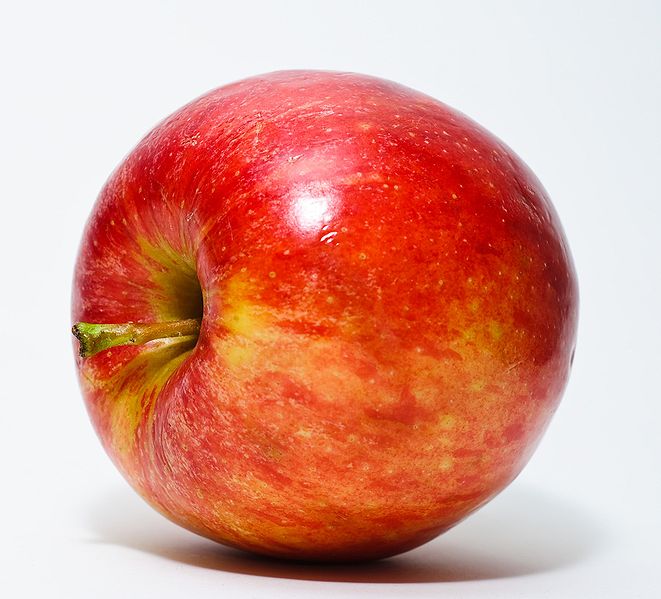
As with our eviction from Eden (a botanical story in itself, it turns out), it all started with an apple. At a historical symposium recently, we were talking about an old apple orchard that survived on a historic homestead in Westminster, Colorado. Do you know the name of the apple?, I asked, and the answer led me into temptation.

Apple image by Abhijit Tembhekar from Mumbai, India, source: Wikipedia.

"Sops-in-wine," I was told. Oddly, I had just read that very name in American Household Botany, a useful compendium of botanica I'm currently reading. But the name, sometimes known as "Sops-of-wine," was not applied (in the book) to heirloom apples. Off we go then!

What are sops? The noun, we understand, refers to "a piece of food dipped or steeped in a liquid," from the Middle English, soppe, and allied to, of all things, sopaipillas, which derived from sopa, or food soaked in milk, apparently of Germanic origin. About the only use of the word I can think of nowadays is in the adjective form, sopping wet. (Except for a friend of mine, whose 17 years in old Mexico taught her to make a mouth-watering sops of bread in red chile sauce.)

Sops of Wine is described by Big Horse Creek Farms as an "excellent early summer apple which grows well in all regions of the South. Its exact origins are unclear, but Beach (1905) says it is an ancient English culinary and cider apple. Fruit medium to large, slightly conical, with greenish-yellow skin covered with dark red faint red striping. Flesh is yellow and often stained with pink"—just as if it had been sopped, or soaked, in wine. Whether it actually was ever sopped in wine is, I suppose, another story.

Another plant truly was sopped in wine: the Clove Gillyflower, to which the name "sops in/of wine" is also applied. We've all seen these flowers, we just know them by another name: Carnation (Dianthus caryophyllus and others). John Parkinson described “gilloflowers” in 1629, in his “Paradisus Terrestris.” He notes:

To avoid confusion, I must divide Gilloflowers from Pinkes and intreats of them in several chapters, of those that are called Carnations or Gilloflowers as of the greater kinds in this Chapter; and of the Pinkes as well double as single, in the next. But the number is so great that to give several descriptions to them all were endlesse… I account those that are called Carnations to be the greatest, both for leafe and flower, and Gilloflowers for the most part to bee lesser in both…”

Parkinson thereafter names some nineteen types of Carnations and 29 of Gillyflowers, not including the small wild gillyflowers he calls “Pinkes.”

Dianthus, literally from the Greek, means “divine flower” (dios plus anthos). It is in the family Caryo-phyllaceae, and the specific epithet of Gillyflowers, D. caryophyllus, adopts the family name. The carnation is also linked to cloves, and was once called “clove pink” for its scent and frequent use as a substitute for the expensive imported spice.

The clove tree, dried buds of which are the familiar spice, was Caryophyllus aromaticus L. (caryo meaning nut, and phyllus, of course, leaf). (It is not, however, in the Caryophyllaceae, but in the Myrtaceae, where it is now known as Syzygium aromaticum (L.) Merr. & L.M.Perry. Go figure.)

The English name Carnation is often thought to be derived from the Latin for flesh, as in carnal or carnage, which many of us associate with the color red. In fact, according to Webster’s, the carnation was originally “flesh-colored but now found in many color variations.” An old alternative, dating to the 16th century, connects the word to “Coronation,” in reference both to its common use in “weaving crowns or chaplets for the head, or as Lyte has it, from the flowers dented or toothed above—like to a littell crownet.”

Whence "gillyflower"? Wikipedia suggests this one is a corruption of the French giroflée, which translates the original Greek karyophyllon. Which puts us back to cloves again.

Should you not wish to adulterate good wine by soaking carnations in it, this same Wikipedia article offers a recipe for making wine using only gillyflowers, if you happen to have a peck of them on hand.

An old recipe for gilliflower wine is mentioned in Cornish Recipes Ancient & Modern dated to 1753:

“To 3 gallons water put 6lbs of the best powder sugar; boil together for the space of 1/2 an hour; keep skimming; let it stand to cool. Beet up 3 ounces of syrup of betony, with a large spoonful of ale yeast, put into liquor & brew it well; put a peck of gilliflowers free of stalks; let work fore 3 days covered with a cloth; strain & cask for 3-4 weeks, then bottle."

These days, it's a challenge to find carnations that smell like cloves or anything else. I suspect our modern "gillyflowers" would not make a very fragrant wine. Maybe the apples would work instead!

——More References
A Sales Manual on Colorado Carnations, by the Colorado Flower Growers Association, Inc. circa 1960s (includes an extensive history chapter on this flower, quoted above; online at Colorado State University).

Cloves, Picotees, and Sops in Wine, a nice essay on Cottage Gardening by Barbara M. Martin.

American Household Botany: A History of Useful Plants 1620-1900, by Judith Sumner. 2004. Timber Press, Portland and Cambridge. 396 pages.


Sunday, May 01, 2011

April Showers Bring... a New Berry!

Earth Day and Arbor Day are both more than a week past, and May Day is well underway as this late-breaking edition of the Berry-Go-Round plant carnival hits the streets. It's time to find out what those April showers have brought us. Some entries below came straight to me, others I tracked down in the wilds of the web, looking for signs of spring and plant life. Enjoy these offerings!

It's All About Trees

First up, grab a shovel and join Jade at Brain Ripples , who brings an early entry of 15 Celebrations in Spruce and Birch to kick off our thoughts about trees with reasons to celebrate and, of course, plant trees! Link-rich, this post is a carnival in itself, and well worth a visit.

Over at the Digital Botanic Garden, we find delicious walnuts, along with a little reminiscence about the walnut-shell boats of childhood. In the spring theme, Phil also brings us a favorite showy flowering shrub. Nice for me, as we don’t get to see these much around here. Back in March, Phil also explained the language of love, floral edition, by outlining how two fictional romances might have—or have not—taken place. A must read! (bookmark it for Valentine's Day)

Step-by-step spring from Sarah at Musings from Dave whose written musings... on the gradual onset of the green season are as charming as her photographic accompaniment. Second installment here. And earlier fabulous time-lapse close-ups all help us see spring as it happens!

Tai at Earth, Wind & Water explores the virtues of Red Filbert, a new one to me, but most attractive!

Please welcome Georgia’s first submission to BGR from Local Ecologist, as she combines history and ecology to chronicle changes in the urban tree canopy on Broadway north of Columbus Circle between 1901 and 1912. What happens to trees when New York City builds a subway? Great sleuthing, Georgia—we hope to hear from you again.

Ted at Beetles in the Bush brought us the spectacular ceibo, also known as cockspur coral tree. It's the national flower of both Argentina and Uruguay, so we appreciate the lengths he went to for these gorgeous photos!

As we are speaking of trees, The Nature Conservancy undertakes to Plant a Billion, in its efforts to restore the Atlantic Forest of Brazil, the lungs of the planet—and much more. Meet a few tropical trees, watch their seedlings grow on the home page at this site, and see if you can help this critical project.

Lest we forget that much of our planet is treeless, FF's companion blog, Small Wonders, provides an opportunity to rethink Arbor Day in favor of prairies where appropriate, along with a review of this holiday's history.

On to Spring's Wildflowers

Puca at Anybody Seen My Focus? invites us to join a hike on the Bradley Mountain Trail in the Davidson-Arabia Mountain Nature Preserve in DeKalb County, Georgia. Parts two and three of the hike follow, with fascinating terrain and natural "dish gardens" (a new phrase to me) that hold two outstanding wildflowers: the Elf Orpine (Diamorpha smallii) and the Oneflower Stitchwort (Minuartia uniflora).

Comment1 at Real Monstrosities offers an inventive look at pitcher plants from someone who “decided to rekindle my love of creepy crawlies and years of avidly watching David Attenborough documentaries and create this, Real Monstrosities. Life at it's most bizarre. A collection of creatures strange in body or habit.” Thanks for joining us this month!

At Hill-stead's Nature Blog, Diane tells us how to feed the hungry, especially birds, butterflies, and other picky eaters who depend on native plants for sustenance! This story of winter's deprivation offers a thoughtful look at an important side effect of the spread of invasive exotics and a valuable reminder of another good reason to go native in your landscape.

Mary, the Accidental Botanist, takes us on a visit to her local library, the internet and shows how we as individuals can contribute. It’s a reference collection where any and all of us can make a difference!

Jeremy and Luigi at Agricultural Biodiversity bring us a coconut imposter and cautionary tales about germplasm documentation. Jeremy adds "the comments add a lot to the discussion... [comments are] one of the best things about having a blog, and one reason to submit to BGR is to encourage new readers and potentially useful new comments." So, don't forget to comment—it's important!

Dave at Osage Orange dropped by with another reminder in the year of the Juniper, this time an essay on proper pruning and other spring garden chores.

Some "wildflowers" can fool us, and beauty is always in the eye of the beholder! Kate at Beyond the Brambles discovered a way to turn the tables (and fork) on those who outgrow their hospitality. She found the invasive Japanese knotweed to be Tangy, Fibrous, and Slightly Sweet. Who knew? We should be eating more of these! Kate just discovered BGR and plans to host in July—welcome aboard!

A few more gleanings...

Ellen, the Adirondack Naturalist, has been transplanted to Michigan, where she found a seasonally appropriate story of resurrection to post.

The Phytophactor has produced no less than 65 posts since the last BGR, and, it being spring, at least half of them are about plants. You'll find lots more there, but I simply have to point out one little ditty he calls Plant Porn. Must-see video! Sex and archegonia bring to life what we read about in college botany but never got to see happening!

At Botany Photo of the Day, I picked out skunk cabbage among this spring's offerings. You'll find much more to explore there as well.

Nina at Nature Remains goes Searching for Spring, as she brings us a tiny harbinger, Draba verna (favorite research subject of my friend Julie). On a spring wildflower trip with the Midwest Native Plant Society, the rare Draba brachycarpa also puts in a welcome appearance. If you're still hungry for spring wildflowers, Nina will help, with little men of the spring woods, a delightful frolic, and time with trout lilies.

Tell them Berry-Go-Round sent you

Lots to keep you busy! Thanks for stopping by! Please enjoy these authors and give them feedback. We hope you'll spread the word about Berry-Go-Round by linking back if your post was included, or even if you just enjoyed this edition. Next month's adventures in botany will be hosted by Matt at Sitka Nature.


Thursday, April 07, 2011

Suddenly Spring

By the time I started actively searching for signs of spring this year, it was well on its way!

I should have checked for Easter daisies (Townsendia cf. hookeri) on St. Paddy's Day (March 17th). I didn't get to my favorite patch until April Fool's Day, but they were chugging along just fine, and right where I expected them to be. You can see them, right?


How about now?

Some of our earliest spring wildflowers are well hidden—if you didn't know exactly where they are, you'd be hard pressed to spot them! Hidden in plain sight, right along one of our most popular trails in full range of unscooped dog poop, this patch of Easter daisies was still unobserved by 99% of passersby. Those who saw me with camera and dog weren't even curious about what I was trying to photograph.


How's this for an Easter bouquet?

The stemless Easter daisy can't help but look like an old-fashioned "posy" or nosegay, with all the flowers clustered at the base, obscuring a rosette of leaves that are, by themselves, easy to overlook. Without the burst of white color to draw the eye, these little guys don't suggest any dramatic display at all!

The early bees are having no trouble finding them, however.


Equally cryptic are those who will bloom a bit later, now mere hints of beauty to come. Here, a feathery rosette of Lambert's loco cozies up to the glaucous blue basal leaves of one-sided Penstemon. Only by watching through the season would we know what they're going to be capable of producing!


The name of this bulb I planted long ago in the backyard popped back into my head this morning as I went out to take an updated photo. Siberian squill, Scilla siberica, naturalizes even here in the rugged and challenging West apparently.

I stand corrected, thanks to Nina at Nature Remains and depending on whether you're a "lumper" or a "splitter." This is, per the criteria at Wikipedia, Chionodoxa rather than Scilla. Hmmm... "Glory-of-the-snow." Think I like that better than "Siberian squill."

The few that I planted, probably 25 years ago now, before I knew better and when I still had gardening illusions, have now escaped the rock garden and carpeted even gravel waste areas in my none-too-well-tended yard. Blooming before the daffodils, they hint of things to come; however dry the season, they manage well enough on the residual soil moisture of previous snows and just ignore the hot dry season in dormancy.

Thankfully, they've not escaped the confines of the limited backyard area, as the grape hyacinths used to do before the chickens and deer ate them all. Although it may be fine in controlled shady lawn sites, the thought of deliberately planting it in wooded areas back East, as the garden websites seem to suggest, raises concern. I'm sure it'd be well able to outcompete native spring wildflowers, and I wonder whether it's ever considered invasive.

Also naturalizing, but more welcome, is this Yellow Prairie Violet, Viola nuttallii, happily blooming nearby in the same gravel area. Like the perennial bulbs, these natives thrive on the neglect provided by the absent-minded gardener, as well as the indifference of the season, which keeps forgetting to add moisture.


Friday, March 25, 2011

Big Blue: A Grass for the Times?

Last fall I had an email from a botanist friend: What’s going on with big bluestem? After he pointed it out, I noticed that, sure enough, this species, one of the dominant grasses in the tallgrass prairie (as in the source of the original Kansas sods that once housed the homesteaders), was bustin’ out all over the foothills!
Above: Fall color in "turkeyfoot," Big Bluestem grass (Andropogon gerardii), looking across Section 16 and Boulder's Jewell Mountain Open Space. (You can even see the turkey feet in this photo!)

Normally, Big Bluestem does occur on the slopes of our mountain front in sporadic patches, but has been expanding in recent years. In 2010, this warm-season grass had an extraordinary year. Its abundance first drew attention at Lookout Mountain, on the slopes of Windy Saddle Park and adjacent areas, where patches of last fall's russet color could still be spotted in January, even from a distance, as long as the ground was free of snow. Big bluestem and its cousins in the grass family provide great winter color in the landscape.
[This post is a revised version of an article that appeared in the March edition of the Plan Jeffco newsletter, and is therefore oriented toward local open space parks.]

Tallgrass prairie, whether here or in the East, is a tattered remnant of what it was in its glory days. We’re lucky to have sizable patches in Jefferson County; efforts to protect some have been underway for more than 20 years. It’s been years since we talked tallgrass prairie here at FF, but we have continued to monitor developments in the Rocky Flats area, where our best examples of this rare ecosystem survive, including the Ranson/ Edwards property and Jewell Mountain, where Boulder conveniently protected several hundred acres. Patches of big bluestem on the foothills slopes are fine, but limited, reminders of the more extensive remnant prairie that once rolled out across the county but now have retreated to a fringe along the mountain front. Most of what you see west of Highway 93 and north of Hwy 72 is tallgrass prairie.

Big Bluestem (grass)
Andropogon gerardii
  • Warm-season sod-forming grass.
  • Height: 4-5 feet in Colorado; to 8 ft in prairie states.
  • Range: All but the five westernmost of the lower 48 states, as well as the central provinces of Canada.
  • Dominant and characteristic grass of the tallgrass prairie ecosystem.
  • Flowering heads are 4-5 inches long, with 3 (sometimes more) spreading branches, suggesting its other common name: turkeyfoot
  • Links: At USDA Plants database; at Illinois Wildflowers.

Don't Confuse Big Bluestem with:
Smooth Brome (Bromus inermis; Bromopsis inermis) is a ubiquitous pasture grass that was introduced in the late 1800s for livestock forage and erosion control. A sod-former, it tends to grow in extensive monocultures, unlike the patch effect of bluestem, although it is a similarly robust grass that turns color in the fall (more brownish than reddish, however). Smooth brome has leaves on the stem, not just at the base, and lacks the characteristic "turkey foot" seedhead. It is invasive in prairies, and some states consider it a weed. According to the USDA, Smooth Brome now occurs in every state except Hawaii, Alabama, and Florida.

Big Bluestem in Jeffco’s Landscape
Look for these foothills patches primarily on unforested south- and east-facing slopes: on Mt. Morrison, most central-county slopes visible west of Highway 93, and on the north slopes of our canyons, from Bear Creek to Golden Gate. In Mt. Galbraith Park, you can see the colorful auburn patches across the canyon opposite as you make your way up the trail. Driving west on I-70, look for it to the north as you enter the foothills, on the slopes in Matthews-Winters Park.

In the southwest part of Red Rocks Park, bluestem occurs on more prairie-like level sites, because that area has been long protected and contains isolated spots where the Rocky Flats alluvium persists on lands that would otherwise have been cultivated or developed. In fall, Big Bluestem blends perfectly with the outcrops of the Fountain Formation that define Red Rocks.

Lack of development, and a somewhat inhospitable climate, have also protected the Rocky Flats area. The extremely cobbly soils, beloved of gravel companies, hampered agricultural attempts on much of the area, and enhanced the available moisture content for the growth of these taller species. These soils are considered among the oldest in Colorado, in part because the area is unplowed, with some estimates placing their age at 2 million years. But Big Bluestem’s visibility in the landscape of any given year reflects how we’re doing on overall precipitation and temperature.

The Water Year and Other Influences
Based on the 30-yr average precipitation, our wettest month of the year should be May. When it is, that’s about perfect for big bluestem and other warm-season grasses (including blue grama, sideoats grama, little bluestem, and switchgrass), which are just getting started as the weather warms toward summer. By June, the cool-season grasses (such as the common lawn grasses, including Kentucky bluegrass, which take advantage of early season moisture to start growth) will be ready to flower and set seed, but you’ll still have to hunt around on the ground to find evidence that big bluestem is even alive. Large clumps of hairy, velvety blue-green leaves will be your hint.

In July, those spreading clumps send up tall flowering shoots, which produce the “turkey-foot” seedheads by August. When cool-season grasses are giving it up and their seed has scattered, Big Bluestem ripens into the terra cotta masses that reveal its presence even from a distance.

This seasonal habit represents an entirely different metabolism (called “C4”) in these warm-season plants, which use carbon along different pathways than many familiar plants. According to some researchers, this may give them an advantage under conditions of elevated carbon dioxide (think global climate change), especially during drought.

Interestingly, although it seemed, until February snows, that it’s been droughty for several months, 2010 was a good moisture year during its first half, giving Big Bluestem the start it needed. In fact, rainfall in this part of the county has been at or above normal every month from April 2009 through last June. (Later records have not yet been posted online; I’d guess July stayed high as well.) Average temperatures have also hovered a degree or two above normal since late in 2008. Both conditions have supported growth of Big Bluestem, a species that prefers it a little more moist and warm than is the rule in Colorado. If we go too dry and warm, we’re apt to see more of its cousin, little bluestem, but as long as it finds a moist spot, Big Bluestem will remain a part of the county’s natural prospect.

——
Further Reading
Many more references—bison grazing effects, mycorhizal associations, fire, etc.—can be found via Google Scholar; here are a few to get you started. If you've been following our Indian Gulch fire, some of the articles on fire may be of interest; parts of Mt. Galbraith Park, mentioned above, burned. Note that most articles are in Jstor, and only abstracts are available to those of us without university connections.

Biomass production and species composition change in a tallgrass prairie ecosystem after long-term exposure to elevated atmospheric CO2
Clenton E. Owensby, Jay. M. Ham, Alan. K. Knapp, Lisa. M. Auen, 2001, Wiley Online Library.

Photosynthetic and water relations responses to elevated CO 2 in the C 4 grass Andropogon gerardii
AK Knapp, EP Hamerlynck, CE Owensby, International Journal of Plant Sciences, V 154,#4, pp 459-466, 1993.
In absence of water stress, such systems don’t respond to elevated C, but in water-limited envts, levels of leaf phi, leaf-level ps rates, and stomatal conductance are all likely to be affected by elevated atmos CO2, with the net result being inc in biomass productn.

Growth and Gas Exchange of Andropogon gerardii as Influenced by Burning
Tony J. Svejcar and James A. Browning, Journal of Range Management, Vol. 41, No. 3 (May, 1988), pp. 239-244

Long-Term Effects of Annual Burning at Different Dates in Ungrazed Kansas Tallgrass Prairie
Gene Towne and Clenton Owensby, Journal of Range Management, Vol. 37, No. 5 (Sep., 1984), pp. 392-397


Friday, March 04, 2011

The Mysterious Internet

It's a tangled web out there, for sure, and its ways are beyond mysterious. The Phytophactor offered kind words about FF re: the latest Berry-Go-Round, prompting me to go look at my own stats again. I'd decided last time that this is a futile exercise yielding little in the way of intelligible results. It still is. And, of course, it's hard to tell whether people are satisfied with what they find when they arrive.

Speaking of the Phactor, don't miss his posts from early this week on the evolutionary timeline, and one on endangered plants. He's been very prolific lately, and these two are great.

But I just know you'll be interested in some fascinating details about the appeal of Foothills Fancies to the online world at large. Here's a list of my all time top posts (all time being "since Blogger installed stats" or mid-2010).
  • Scales and Tails
  • Best Botany Blog
  • My Kingdom for a Domain…
  • Whatever Happened to Sphenopsida
  • High Color: Alpine Tundra
  • Live at Bear's Lair
  • Tree Cholla
  • Stuff Plants Do
  • Summer Feast BGR
  • Snowy Sunday Visitors

The moral of that story is that old posts live for...ever. A sobering thought. The twin two-year old posts on obsolete plants (Sphenopsida, 27 in Feb) and obsolete taxonomy ("My Kingdom...", 38 in Feb) are still tops in this past month's searches. Several people wanted to know about Zosterophyllum and Asteroxylon? If FF comes up, that surely speaks to the paucity of information out there on fossil plants.

It's heartening to know that people are also out there looking for botany blogs. That means I should be doing more botany, right? (We all should...) A little post I wrote five years ago, simply pointing to the wonderful Botany Photo of the Day is still a top-notch vote-getter.

How do people find us? It's clear from the above list that participating in carnivals adds to one's visibility, as most of those posts were included in one carnival or another. Google, in all its guises, is always a great source of traffic; this month the new listing FF got from Online College Courses is already being productive.

Other bloggers, and being well connected, also help. I already miss the Watcher, who sent more people my way than anyone until he stopped posting one month ago today. Inexplicably moving to the top of the referral list lately is the terrific bird-blogger Bootstrap Analysis. As far as I can tell, my only acquaintance with her was a post I submitted to I-and-the-Bird FIVE years ago! (Thanks, Nuthatch!)

juvenile Western RattlesnakeBut the all-time top of the Foothills Fancies hit parade, with more than twice as many visits as any other post, is the delightful Scales and Tails, documenting a fascination with snakes we might not have expected. In particular, strong in the search terms are things like "baby rattlesnake identification," "images of baby prairie rattlesnake," and so on. (We can only hope these weren't emergency searches.) Thanks go to this little guy. I hope you're doing well, sweetie, wherever you are.

I think I feel a rattlesnake post coming on... stay tuned!


Sunday, January 30, 2011

January Berries

The latest edition of the Berry-Go-Round plant carnival is now posted at Seeds Aside.

This month's eclectic collection offers a look at a dozen record-holding plants, news about Sphagnum genetics, book reviews, the evolution of C4 photosynthesis, and the stunningly unique Fern Rap. Or how about the oldest evidence of plants found to date in Florida? All of these tasty tidbits, and many more, can engage your brain cells if you wander over to edition #36 of the Berry-Go-Round.

Nice job, Laurent! Thanks for the great reading...


Saturday, January 22, 2011

"Botanical" Wonders

Two events conspired to renew my level of botanical engagement this month. The second was Mary, the Accidental Botanist, who posted a piece about ThePlantList.org, a great resource for people (Mary aptly calls "plant nerds") who want to figure out more about a plant.

But the original reason I needed to re-engage was work-related: a project that gave me an excuse to learn more about the rare plants at Summit Lake Park, the alpine contribution to Denver's Mountain Park System. I need to know what these plants look like, and I won't be making any trips to Mt. Evans or Summit Lake in January (see photo). Could the new PlantList site help me?

In two clicks, on my first attempt*, I found myself looking at an image of herbarium specimen #K000697587 of Draba exunguiculata at, incredibly, the Kew Herbarium! It was collected near Gray's Peak in 1885!

*Okay, not quite that easy. Plantlist has a typo; I had to add an "n" to the species epithet to make it work.

Quite a few of the rare plants at Summit Lake are mosses and liverworts (bryophytes). In another two clicks, this time over to the New York Botanical Garden, I was studying a map of locations of specimens of the rare moss, Oreas martiana. Although 16 of the 39 specimens at NYBG are from Colorado, the map showed only six locations on the North Slope of Alaska, one in northern British Columbia, and two in Greenland. Ahh, there's the wrinkle: The specimens have to be "georeferenced," that is with coordinates recorded, in order to be plotted, and many, it seems, are not.

The Plant List, sad to say, deals only with vascular plants and bryophytes. You'd think 298,900 valid names (and more than a million total) would be enough to satisfy anyone, no?

As I said in a previous post about Summit Lake:

I’m a bit daft about cryptogams, and it seemed everywhere we tried to put a flag, the “bare” ground was thick with lichens and mosses. Tundra lichens are a special breed—most are species that dominate arctic ecosystems and aren’t seen down here in the lower 48 states, except at very high altitudes. So they’re special, at least to me.

What about my favorite arctic tundra lichens that also occur at Summit Lake? No help from the PlantList there, but I was hooked on the concept. Lichen images are rarely a problem; Steve and Sylvia Sharnoff have helped us out with their definitive book and website at Lichen.com. (And Steve's more extensive photo gallery, a wonderful place to explore on a snowy winter's day.)

A quick visit over to the American Bryological and Lichenological Society (ABLS) website reminded me I should drop in on the lichen herbarium at Arizona State University, where Dr. Thomas Nash has amassed more than 109,000 lichen specimens. Searchable... Now that sounds promising!

Instead of searching only the ASU collection, though, I found myself presented with this opportunity to search lichen herbaria across the US and Canada! Enter a taxon, and/or maybe some criteria, and pow! you've got label data from any of the 15 institutions in the Consortium of North American Lichen Herbaria.

A few more clicks, and you'll have a map of all the georeferenced specimens in the database, or maybe a list of all the lichen specimens collected within a given distance of whatever coordinates you care to enter. If you ask for all the occurrences of the arctic lichens Dactylina madreporiformis (aka Allocetraria madreporiformis) and Thamnolia vermicularis, you get 515 specimens in ten (counting subspecies) taxa, that look, on the map, like this. The Dactylina is red; Thamnolia blue.

The armchair explorer can click each little map bubble to view a specimen label for that site. If multiple specimens occur there, a list of them pops up, and you can pick which label you want to see.


If you have a microscope handy, you can even try using a Dynamic Key to the lichens of an area, as in this one for the 348 lichen species within 40 miles of Summit Lake. The key will walk you through the characters, eliminating species at every choice (pick a feature you know, if possible, or can make an educated guess at), until you arrive at your answer. Unfortunately, the first big steps in elimination require you to know quite a bit about the lichen's innards, like spore features and what the photobiont (algal partner) is. If you happen to know it's cyanobacterioid, you're in luck; you'll only have to work through 36 species. Alas, about 90% of lichens involve green algae, often Trebouxia, as the primary photobiont.

Easy way to lose a week or two (as I did)... If Dr. Weber's lichen collection* at the CU Boulder Herbarium (COLO) was in the database, I'd be in real trouble!

You say you're not particularly fond of lichens? We'll have to address that in a future post...
——
* Specimen data aren't online, but you can explore his Catalog of Colorado Lichens.

For Berry-Go-Round #36... "Botanical" is in quotes because lichens aren't really considered to be plants by most people. These days they're organized as "lichenized fungi." But BGR says it's okay "as long as a reminder clearly indicates fungi and algae are not considered plants anymore." This is my reminder.


Sunday, December 26, 2010

The Holly and the Ivy

Christmas, and the whole winter season in general, is brightened by a host of plants we traditionally associate with this time when we are, in the Northern Hemisphere temperate zone, largely plant-deprived. Lately it seems The Tree and the ubiquitous modern Poinsettia get most of the glory, but in times past many other plant species lent color and meaning to our festivities. As this song has been trickling through my head all week, I thought I'd explore a few of its historic associations, and give you a reason to keep your holiday greens up a little longer.

In days of yore, when certain Europeans placed great emphasis on the symbolism associated with plants and animals, the year was divided into two parts: the waxing year, into which we pass on the Winter Solstice, is ruled by the Oak King; the waning half is ruled by the Holly King. (Photo from Wikimedia commons.)

As the song (circa 1710) says:
The Holly and the Ivy, now are both well grown;
Of all the trees that are in the wood, the Holly bears the crown.

The Holly (always symbolically male, though botanically coming in both flavors) is "best in the fight;" he wins the crown at Summer Solstice but rules only until displaced by Oak on December 21st. (The "boughs of holly" tradition predates our image of Victorian Christmases; the Romans used holly in similar fashion a millenium earlier for celebrations of Saturnalia, associated with December 17th.)

The Ivy is traditionally female, and her place in symbolism sheds a more sinister light on the festivities:

Holly stands in the hall, fair to behold:
Ivy stands without the door, she is full sore a cold.
Holly and his merry men, they dance and they sing,
Ivy and her maidens, they weep and they wring.

Ivy hath chapped fingers, she caught them from the cold,
So might they all have, aye, that with ivy hold.
Nay, ivy, nay, it shall not be I wis;
Let holly have the mastery, as the manner is.

This sad story actually makes logical sense, in that Holly has been brought inside to decorate the mantel, while Ivy, being attached to the outer walls of our hypothetical English country house, must spend the winter outside.

Holly and Ivy Here and Now
Neither of these excellent plants of the British Isles escapes sinister implications on this side of the pond. English Ivy (Hedera helix) and English Holly (Ilex aquifolium) both can, and have, become invasive here in North America. Here one of the benefits of Colorado's harsh and droughty climate presents itself; neither species, thankfully, has escaped from cultivation in our fair state. Elsewhere it's not so comfortable: English Ivy is a designated noxious weed in Oregon and Washington, whose forests, coincidentally, provide most of our domestic holiday greens. (See another essay on the holiday harvest over at Small Wonders. Apparently I've long been interested in this topic.)

H. helix can grow to choke out other plants and create "ivy deserts" in the United States. State and county sponsored efforts are encouraging the destruction of ivy in forests of the Pacific Northwest and the Southern United States. Its sale or import is banned in Oregon. Ivy can easily escape from cultivated gardens and invade nearby parks, forests and other natural areas. Ivy can climb into the canopy of trees in such density that the trees fall over from the weight, a problem which does not normally occur in its native range. In its mature form, dense ivy can destroy habitat for native wildlife and creates large sections of solid ivy where no other plants can develop. —from Wikipedia.org.


English Holly is also plantae non grata in the Pacific Northwest, despite its commercial production there, which may well have been a source for the invasion. It is considered naturalized in many forests in our western tier of states, where it occurs in the westernmost counties, but hasn't spread in the eastern U.S. forests as ivy has, according to the USDA distribution records. It has not, so far, been listed as a noxious weed, though it is projected to change the composition of the Pacific Northwest forests in the decades ahead.

Household Decor—and More
It's not just about decking the halls to bring inside a little spirit of the forest at Christmas; in older days, the practice of using plants indoors was year-round, each with its season. This tradition supported not just comely decorations, but practical applications of sanitation and, no doubt, sanity in times when people were not in the habit of bathing regularly and often lived with their animals. In this critical role, plant use was known as strewing, and involved a wide variety of herbs and other species, as partially outlined below.

Candlemas Eve, by Robert Herrick, published 1648
(found online at The Hymns and Carols of Christmas)

Down with the rosemary and bays,
Down with the mistletow;
Instead of holly now upraise
The greener box for show.

The holly hitherto did sway,
Let box now domineer,
Until the dancing Easter day,
Or Easter's Eve appear.

Then youthful box which now hath grace
Your houses to renew,
Grown old, surrender must his place
Unto the crisped yew.

When yew is out, then birch comes in,
And many flowers beside,
Both of a fresh and fragrant kin,
To honour Whitsuntide.*

Green rushes then, and sweetest bents,
With cooler oaken boughs,
Come in for comly ornaments,
To readorn the house.

Thus times do shift;
Each thing his turn doth hold;
New things succeed,
As former things grow old
.

* "Whitsuntide" is the Christian celebration of the seventh Sunday after Easter. This puts it more or less coincident (given Easter's variable date) with and apparently a replacement for the pagan celebration of May Eve/May Day, aka Beltane.

Obligatory botanical note: I'm going to go out on a limb (or bough) here, and try to put names to these plants, for those of us not conversant with the more common decorative and strewing herbs.

"The Greener Box": Buxus sempervirens, in the unappetizing Euphorbiaceae, is an easy one, and grows in Europe, the Orient, and temperate Asia. Given its toxic nature, unlike the rest, we'd perhaps count on this green primarily for decoration.

"The Crisped Yew": Taxus baccata occurs in north temperate Europe and Asia; in North America, substitute Pacific Yew (Taxus brevifolia).

"Birch" would most likely be Betula alba , which grows in Europe, No. Asia, and No. America, or in No. America, perhaps also Sweet Birch, B. lenta.

For "green rushes," we could use Sweet flag, Acorus calamus, a plant of north temperate regions, as is the Bulrush, Scirpus lacustris, both widely used for strewing.

"Bent": Agrostis stolonifera, perhaps, or others of the more than one hundred species of this grass. Pasture grasses and sometimes weeds, these would have been part of the straw commonly used as floor covering.


Perhaps not surprising is the fact that all of these mentioned have one other thing in common, in addition to this use. These species all come with an "L." after their names, signifying the Linnaean origin of their binomials.


Few of us have backyards that could sustain a year-round harvest of greens for strewing and freshening our houses; most likely, we also lack the time to harvest and redecorate seasonally. As the practice has faded, it seems our winter holiday decorations are the only remnant of a once wider traditional practice of bonding with plants. (At left: Burning The Christmas Greens, from Harper's Weekly, 1876.)

On this day [Candlemas] the Christmas ceremonies, which had lingered on after Twelfth-day, finally closed, and all traces of them were removed. The custom long prevailed, and there must be many still living who can remember the evergreens with which our churches were decorated at Christmas, remaining until Candlemas [February 2nd]. from William Henry Husk, Songs of the Nativity (1868)

Do we have, today, less need in our homes of the freshening effects of greens (not to mention the antimicrobial properties that were probably also a benefit)—or are we just now more inclined (or able) to get those benefits from a commercial product than from our backyards?


Monday, November 29, 2010

More on Plants: BGR #34

You may be wondering why, all of a sudden, plant posts finally started reappearing here at Foothills Fancies. It's a puzzle best solved by noting that the latest Berry-Go-Round plant carnival is now posted over at Watching the World Wake Up.
After months of dereliction, we are trying to recoup our reputation as a plant blog by submitting these last couple posts on plants and their activities.

Pity the green ash, a sample here of the indignities discussed below in Plants Die. We've all observed that, in any encounter with power lines, the tree loses. It might be fun to make a series of these, something like RPL's ecology of shopping carts. What do you think?

As usual, the Watcher has rounded up a nice collection of plant goodies, taking us from cotton T-shirts to favorite malts and brews by way of tropical paradises and temperate berries. Drop in and check out some great plant blogging!


Saturday, November 27, 2010

Stuff Plants Do

We know plants sleep through the long season; some (especially annuals) will never awaken. But plants also move through diurnal cycles most of us tend to ignore; some wake and sleep so obviously that we all notice. Explore these delightful time lapse photographic sequences from Indiana to see plants sleep, and waken, and dance, and grow, and thrash about hunting for something to grow upon.

Photo above of Mimosa pudica, Sensitive Plant (leaves open), from native habitat in Goa India. Photo by J.M. Garg, from Wikipedia. This plant also displays reaction to touch, thigmonasty.

We don’t know whether sleeping plants dream. That link takes you to an essay I wrote 14 years ago; I commented then that, although plant responses to light and darkness (nyctinasty) had been known for centuries, scientists these days had “mostly ignored” this line of research. That’s no longer true, it seems, so the story needs an update, as some puzzles are slowly being unraveled. Darwin would be proud.

Mimosa pudica, leaves closed, Photo from Wikipedia, by “Bluemoose.”

Darwin was right
Indeed, as with so many topics, Darwin was the original researcher, the observer and experimenter who explored the esoteric. The Power of Movement in Plants, published in 1880, was his next-to-last book, and he despaired at times of ever finishing it!

Darwin to Sir Joseph Hooker, March 25, 1878:
I think we have proved that the sleep of plants is to lessen the injury to the leaves from radiation. This has interested me much, and has cost us great labor, as it has been a problem since the time of Linnaeus. But we have killed or badly injured a multitude of plants.

Darwin to Asa Gray, Oct 24, 1879:
I have written a rather big book—more is the pity—on the movements of plants, and I am now just beginning to go over the MS. for the second time, which is a horrid bore.

Darwin to DeCandolle, May 28, 1880:
My MS. relates to the movements of plants, and I think that I have succeeded in showing that all the more important great classes of movements are due to the modification of a kind of movement common to all parts of all plants from their earliest youth.

I just happen to have a handy copy of The Life and Letters of Charles Darwin, compiled and edited by his son Francis, but Darwin's letters are now also available online where we all can explore at will.

Modern Science Jumps In
Some plants, such as Maranta, are equipped with specialized joints that control their daily movements. These structures, called pulvini (sing. pulvinus), occur where the leaf blade joins the petiole, functionally somewhat like the wrist joint connecting your hand and forearm. Rapid movements should be suspected in plants that have obvious pulvini—e.g., in Spathiphyllum, which wilts dramatically in an attempt to remind you to water it, then recovers with equal alacrity when you do.

Don’t you just love scientific writing? I was going to entertain you with terrific information about phytochrome and potassium fluxes and glucosidase, but I'd rather stick to what I can see and understand (sometimes) and appreciate (always!)... I can offer a picture (you'll have to click to be able to read it):


I’m so out of practice that, even when I understand the individual words and phrases, it can be tough to extract meaning from some passages (try your skill with samples at the end of this post). As Alice said to the Caterpillar:

I’m afraid I can’t put it more clearly, for I can’t understand it myself to begin with.

However, science is like a foreign language, where sometimes you can get the general sense of things without exactly being able to translate it word for word. Here goes with a few gleanings.
  • Light hitting leaf blades does nothing, but if it hits the pulvinus, the leaf reacts.
  • Ergo, the pulvinus is the photoreceptor and reacts independently of other pulvini.
  • Phytochrome is the pigment that keeps leaves from opening when it’s dark.
  • Phytochrome controls the direction of potassium movement, which controls water movement and hence cell turgor.
Ueda et al. do the best job of explaining all this in an article that almost reads like English, in parts:

One of these is a leaf-opening factor that “awakens” plant leaves, and the other is a leaf-closing factor that reverses this process such that the plant leaves “sleep”. …significant changes in the concentration of the ratio between leaf-closing and -opening factors in the plant are responsible for leaf movement. And this is a universal mechanism in five nyctinastic plants. …

The motor cells in the pulvini of nyctinastic plants consist of two types: extensors and flexors. Leaflets move upward during closure and downward during opening due to the actions of the extensors located on the upper side of a leaf and the flexors on the lower side. …

So these findings represent an important advance in the bioorganic study of nyctinasty and provide important clues regarding the molecular mechanism of nyctinasty, which has been a historical mystery since the era of Darwin.

To me, the fun thing about this article is that, while the mechanism is universal, the pairs of leaf-opening and leaf-closing factors were discovered to be different chemicals in each of the five species studied! How cool is that? (For extra cool, note that Ueda et al. also address the question of memory in plants, specifically Venus Fly-traps and their mechanism for leaf closure.)

In the case of sleeping leaves that rise, as in Maranta and most others, it seems logical that the sleep position is a tense one, and the leaf relaxes into its daytime posture. If so, then raised leaves are actively holding a position, and wilting must occur through some other process. In Maranta, it does; the leaves relax even more, and leaf margins roll inward as turgor is lost.

So far so good. But these articles tend to use Albizia julibrissin or other leguminous species. What about species whose leaves adopt a drooping posture in sleep (e.g., Oxalis)? Are the "extensors" and "flexors" reversed, or do they respond to different signals? In Oxalis, wilting and sleeping postures may be difficult to distinguish. The upper surfaces are relatively exposed, and covering the lower surfaces may help reduce transpiration, reducing further water loss.

With all that we know about plants, it's nice to know a few mysteries remain. It seems no one has answered the ultimate question: If sleeping is so advantageous, why don't more plants do it?

C. Darwin. The Power of Movement in Plants, John Murray, London (1880).
C. Darwin. Insectivorous Plants, John Murray, London (1875).

—References—

Find lots more references by searching nyctinasty at Google Scholar. Here are a few excerpts from just a few samples over the decades to get you started...

Illumination of pinnule tissue alone induced no response, while illumination of an area as narrow as 1 mm, including only the tertiary pulvini and adjacent portions of rachilla and pinnules, was sufficient for a full response. This suggests that the pulvini themselves, the sites of the response, act as photoreceptors. In experiments with various shielding devices, pinnules on the same rachilla responded independently to local illumination, suggesting the absence of any translocatable effects.

Koukkari, Willard L. and William S. Hillman 1968 Pulvini as the Photoreceptors in the Phytochrome Effect on Nyctinasty in Albizzia julibrissin Plant Physiology 43:698-704.

————


Prolonged irradiation during appropriate parts of the diurnal cycle promotes the opening of Albizzia sic julibrissin leaflets. Leaflets also open without illumination, but such opening starts later and is slower and less complete. Opening in the dark is accompanied by lower potassium efflux from dorsal pulvinule motor cells but equal or greater potassium movement into ventral motor cells than occurs during opening in the light. Far red-absorbing phytochrome inhibits opening in the dark… i.e., a high far red absorbing phytochrome level is associated with low potassium content in ventral motor cells, high potassium content in dorsal motor cells, and a small angle between leaflets.

Satter, Ruth L. and Arthur W. Galston 1971. Phytochrome-controlled Nyctinasty in Albizzia julibrissin: III. Interactions between an Endogenous Rhythm and Phytochrome in Control of Potassium Flux and Leaflet Movement. Plant Physiology 48:740-746.

————


The nyctinastic leaf movement is induced by a pair of leaf-movement factors, and one of each pair is a glucoside. There are two key proteins that are involved in the control of nyctinasty. One is -glucosidase: a biological clock regulates the activity of -glucosidase, which deactivates the glucoside-type leaf-movement factor, controlling the balance in the concentrations of the leaf-closing and -opening factors. The other is the specific receptor for each leaf-movement factor: the genuine target cell for each leaf-movement factor is confirmed to be a motor cell from leaflet pulvini, and the specific receptors that regulate the turgor of motor cells are localized in the membrane fraction. (Ueda et al., 2007.)

Ueda, Minoru, Yoko Nakamura, and Masahiro Okada. 2007. Endogenous factors involved in the regulation of movement and “memory” in plants. Pure Appl. Chem., Vol. 79, No. 4, pp. 519–527, 2007.

————


Tuesday, November 23, 2010

Plants Die

As I wander around marveling at the wonders of Nature, I can’t help also wondering at my fellow human beings. Time and again, I notice that many of them act as if plants are not alive. This is especially true for trees, who exude a sense of eternity that we more transient beings lack. Their relative permanence apparently makes humans think of them as indestructible features of the nonliving landscape, kind of like rocks. (The humans who read Berry-Go-Round are naturally not in this category of humans.)

That phenomenon, a form of plant blindness surely, causes humans to visit all kinds of indignities on these supremely dignified lifeforms, strangling them with wire fences, lopping off limbs, crippling them in countless ways. Even blithely nailing signs to them as if they had no greater purpose in life than to advise us of money-making opportunities or lost pets.

So, for the record: Plants are ALIVE. Trees included, but plants of all sizes and shapes live, and breathe, and grow, and reproduce, and even, after their fashion, move. They do stuff. (Left, a grape ivy looking for something to climb on.) They eat (some more dramatically than others). If you cut them, they will bleed. If you hit a tree with a lawnmower, it will bruise. Each of those verbs could easily be an entire post in itself, but let’s expand just this one example.

“A tree is much more than a chunk of dead wood,” says Alex Shigo, a career plant pathologist with the Forest Service. “Trees are alive; they live all year ‘round, not just for a short time in the summer.” Dissecting trees with a chainsaw, Shigo revolutionized our understanding because he didn’t rest on what “everyone” knew.

“I could either go with the book or go with what I saw in the tree. Either the books were wrong or the trees were wrong. I chose to go with the trees.”

“I started to see trees in a different way because a tree is a living thing. When you hit a living thing, it reacts. When you hit a tree, it does something. When a tree is threatened, it doesn’t just stand there. It establishes boundaries.”

Citing Shigo, a profile in Irrigation and Green Industry (May 2004) adds that humans put new cells in the same old places throughout their lives, but trees put new cells in new places. A tree doesn’t heal, because it doesn’t replace injured cells with new ones; it just creates a wall, or boundary, between the injured wood and the functional tissue. And that lawnmower “bruise” will remain in the wood indefinitely.

Photo courtesy Wikimedia commons by Max Wahrhaftig June 2005: Alex Shigo (far right) explaining markings on an Oak section during one of his last symposia.

Shigo’s work changed how professionals prune trees by demonstrating that some methods actually promoted rot. Sadly, most tree-trimmers have probably not been exposed to these newer methods, and go about blithely disfiguring trees and shrubs right and left. My most pained memory of this is from Arizona, where trees (I think mulberries) are routinely "pruned" back almost to the trunks on a regular basis; they never develop normal branching patterns but become permanent lollipops.

This post topic was inspired by an outdoor planter I saw recently, full of scented geraniums left to wither and freeze. These plants are perennials, houseplants that thrive inside and add wondrous scents to our indoor air! And they’re favorites of mine. It was all I could do to resist attempting to rescue them, but having already brought all my geraniums indoors to crowd the house, I had to walk away. (I also suspected they were already too far gone to recover. May the devas of scented geraniums forgive me…)

As we head into the season of disposable plants* (or one of them), I part company with the so-called green industry, which creates so much life just to send it out into careless hands who think these living beings are mere decoration.
* Yes, poinsettias too are alive, and, in their native haunts or in greenhouses, capable of growing into mature trees of considerable height.

Confessions: I have, of course, killed my share of plants, perhaps, because of my interest in them and attempts to have them share my life, more than my share. Some, no doubt, were killed with neglect. But not willfully, not with premeditation or malice. (Okay, there are exceptions; certainly there are some plants we prefer to see dead.)

So, yes, plants die. Sometimes on their own, and too often with our help.

In the spirit of Thanksgiving, I offer a deep formal curtsy to any and all who treat these amazing, phenomenal lifeforms with all the respect they clearly deserve.

For Berry-Go-Round #34

p.s. Don't forget to observe Buy Nothing Day this Friday!! Eschew the hype...