Tuesday, June 13, 2006

Yuccas, Part 2

(These paragraphs are moved and modified from yesterday's post, because this is the only way Blogger would let me upload the rest of the photos.)


On this photo, the stalk labeled B has lots of healthy flowers. Stalk A, however, has 27 buds or flowers toward the top, and 19 empty flower stems below. I did a small census elsewhere in the neighborhood a week later (6/10), and checked out two stems. One had a single developing green pod on a stalk of 40 flower stems, the other had four pods developing out of 45 flower attempts. In that admittedly small sample, then, we had a success rate of 5.8%... so far! Those five pods haven't made it to ripe yet!


We saw another plant on which all the flowers had shriveled beyond recognition. The stalks, on 6/10, were covered with black and ashy white residue, no flowers or pods survived… Besides predation by Mule Deer, then, these flowers face other threats, which sometimes get the better of them.

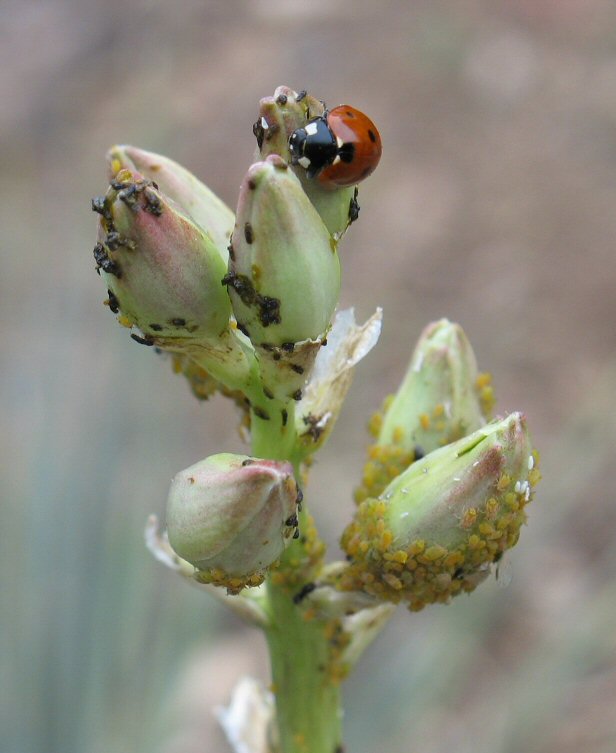
Here a pair of Ladybird Beetles patrol healthy buds, while nearby, another shoot faces a serious infestation of yellow aphids. Even the ants are rallying to the defense, and I believe the small white specks may be eggs of the ladybugs, soon to hatch into helpful larvae, devouring even more aphids. (Please click photo to enlarge those cute little aphids!)

As if that weren't enough, Book Lady tells me she encountered a spider eating a Yucca Moth on one plant. Could that be part of the pollination problem? Stay tuned, for the rest of the story...

Monday, June 12, 2006

Yuccas are Happy!

This is a great year for yuccas! Everyone seems to be commenting on how prolific and luscious the flowers are this year, and making comparisons to last year when few plants flowered and they were less obvious in the landscape. Back in mid-May, Bee Lady remarked on it first—when we saw this young stalk sprouting in Red Rocks with a thousand or three of its kin.

I took the rest of these photos in early June (6/3). Each stalk has many individual large waxy flowers, 40-50 on average, and many plants have more than one stalk, as shown in this typical healthy plant. That should mean LOTS of reproductive power. However, despite the efforts of the Yucca Moth, its dedicated pollinator, only a few fruits per stalk or plant will ripen to seed. One problem is, the flowers are tasty! While I didn’t pick any for salads, I noticed our Muley friend checking one afternoon to see if they were at peak flavor.

[*followup on 6/13/06 at Yuccas part 2]

*Blogger doesn't want to upload any more photos right now... will try again later.

Full Moon Rain Down!

So, we've established that the Yuccas seem to be having a good year. But they may be the only ones! I'm sorry to add, things are looking bleak for the rest of Nature around here. It is dry, dry, dry. Promises to be equal to-- hope not worse than-- the bad year of 2002, when rattlesnakes moved down out of the hills in search of prey, and water rationing was the rule of the day in most local jurisdictions.

Bee Lady reports from a park down south a ways that even the native Junipers are dying! We need rain... badly! On our walk a week ago, we noticed the native Delphinium leaves were dried to a crisp, without flowering. All that green promise I reported so optimistically a month or two ago is withering before our eyes.

With all this in mind, One Deep Breath wants us to talk about the Moon this Haiku Monday. Thunder clouds gathered yesterday afternoon, raising our hopes, and obscuring its face. I never got to see the Full Moon til after midnight. I will try to add a photo later, but for today, here is my hopeful, nay desperate, haiku for a rainy moon.

Thunder without Rain--
Is This Moon Full of Water?
Goddess, Let it Fall!

I wouldn't want to short anyone else, but from what I hear, points east have more water than they can handle. We could sure use a little.

Here's a favorite remembered haiku, by one of the Japanese masters I believe, that I reenacted all last night:
Nine times rising to see the Moon,
Whose silent pace
Marks only midnight yet.

Sunday, June 11, 2006

Why Blog?

We’re all so busy… who has time for blogging? Evidently, a large number of us do, and we know it’s great. But how do you explain the fascination to someone who hasn't tried it, or doesn’t get it? Here’s my attempt, but I’ll look forward to hearing more ideas from the rest of you. (This post is for those to whom I’ve promised to send my list of interesting links.)

1. You like to write. Some of us can’t help writing. It’s a disease. It may even be infectious, because bloggers seem to inspire each other to write more. Before I joined the blog world, I would have thought writers (and even thinkers) were relatively rare. Now I know better—there are, just in my limited experience, dozens of amazing writers in the blog world. Thank you all!

2. You like to read. Some of us will read cereal boxes if there’s nothing else available. Reading blogs is a far better use of your time.

3. You don't like to write--or read.If you're not into writing, try lurking, being a blog voyeur of sorts. If you don't even like to read, try a photo-blog. Several good ones are listed at Tuesdays Photos.

4. You like people. You meet the nicest people online! Join—or create—a virtual network. Find one person whose blog you like, and let him/her lead you to other like-minded (but very different) individuals. I found a blog carnival, I and the Bird, and met some real birders and great people, like 10,000 Birds, Birdchick, Carel, Coturnix (who recently went pro-blogger), Nuthatch, and Dharma Bums. Endment found me from IATB, and introduced me to Cate the Bean Counter, Willow Grace, DebR, Tammy, Fran, and Susan and Jennifer (see Haiku Monday under #6), among her many fans.

5. You don’t like people, but you want to. The internet, like the world, like life, is filled with the good and bad, the ugly and the beautiful. It is, in short, whatever you choose to make it. If you’re selective, you will find something online that matches (or challenges!) your interests, your biases, your understanding. And helps you grow. Browsing blogs can restore your faith in people. Could probably destroy it too, but I’ve been focusing on uplifting arenas, and I’m charmed by what I find. Please note: Most of my blogging has been science-nature oriented, so you'll have to find your own way in other arenas. Art, culture, politics, crafts, parenting, celebrity, music, cooking, unimaginable diversity!

6. You’re bored. Need something to do? How about Sunday Scribblings, Haiku Monday, Tuesdays Photos, Poetry Thursday, Illustration Friday? That only leaves you Wednesdays and Saturdays to be bored, and a little browsing is likely to fix that as well. (Who could be bored?) Fun and games? Try a meme, like the letter B, or The ABCs of Me, or Wordplay.

7. You’re nosey. Blog-browsing is like eavesdropping on the lives of strangers. We can only learn so much from our one (current) lifetime, why not learn from the lives of others as well? Especially because we can learn things we will never personally experience. The more you learn, the more you blog—and you can share what you learn each week at Life’s Little Lessons.

8. You wish you could travel more. You can, even if you only have a few minutes, go anywhere in the blog world—free! Blogs hosted on blogspot.com often have a small “Next Blog” button at the top of the page. Click on it, and see where you end up! Can’t read Malaysian? Click again for another random page somewhere else in the world. Or use the “Search” feature to find blogs from Tasmania or Lapland. Remember, one nifty blog leads to many others (think Six Degrees of Separation). In 3 clicks, I think it was from I and the Bird, I discovered Baghdad Burning, an inside look at what’s really happening in Iraq that the newscasts aren’t telling us. We all should be reading this!

9. You want to escape reality. You could use the “Search” button again to find fantasies or science fiction worlds. But remember, someone else’s reality can also be your fantasy—see number 7.

10. You want to immerse yourself in reality. If you think your life is too boring, start a blog. Then you’ll have to find something interesting to do, just to blog about it!

11. You could use a little therapy. As someone said “I write to find out what I’m thinking.” Expressing yourself in a blog, as in a journal or a letter to a friend, can help you figure out what you’re about cheaper than—and probably faster than—conventional psychotherapy.

Okay, this has taken most of the morning, so breakfast will now have to be lunch. More links another time--this is more than enough to get you started!

Tuesday, June 06, 2006

If the Lady's Slipper Fits...


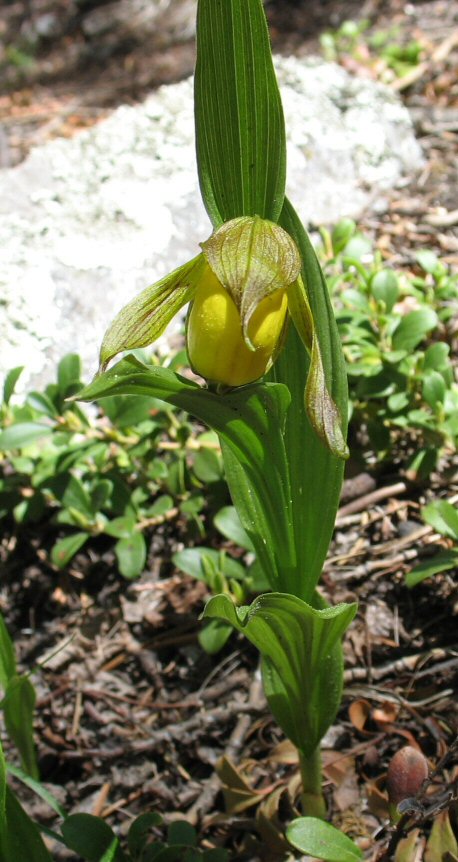
We returned to the hidden site of the elusive Yellow Lady's Slipper today, not to be disappointed. She showed her face, and her cousin was likewise more visible than last week--two orchids for the price of a short walk in the woods. What more could a naturalist ask? (Perhaps better focusing? Sorry!)

For those who are keeping tabs, this is Cypripedium calceolus.

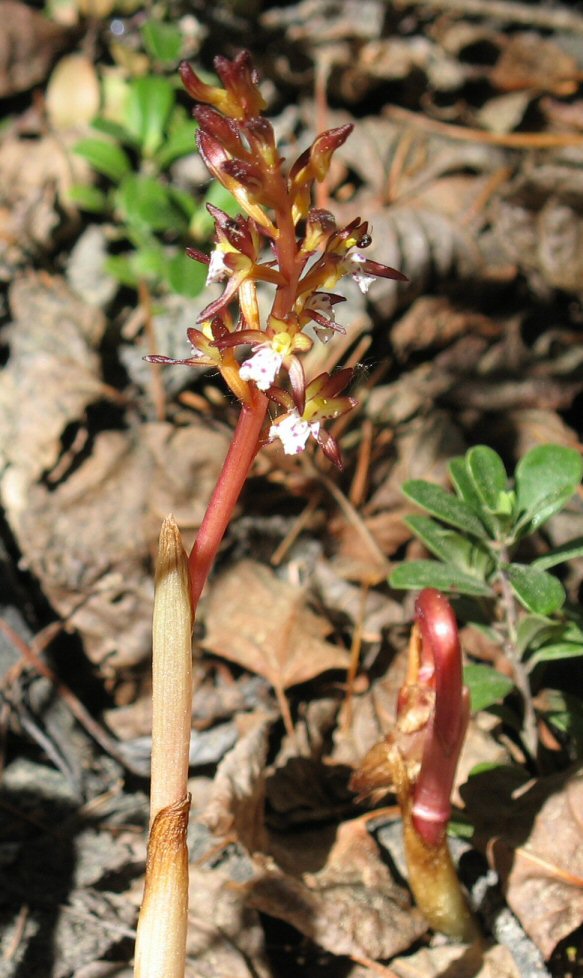
And her more abundant relative, the Spotted Coralroot, Corallorhiza maculata, left. (No, I didn't key it out, so please consider this a "most likely" approximation, the next most likely being a rarer species.)

Are we crazy, venturing abroad in search of the elusive Cypripedium? Let me offer this historical tidbit, at least 100 years old, I've no doubt. Enjoy this excerpt from a poem on the trials of field work by Henry Beers, Ye Laye of Ye Woodpeckore, in which the "Woodpeckore" and the "Pale Student" speak alternately:

--------------

O whither goest thou, pale student
Within the wood so fur?
Art on the chokesome cherry bent?
Dost seek the chestnut burr?

Pale Student:

O it is not for the mellow chestnut
That I so far am come,
Nor yet for puckery cherries, but
For Cypripedium.

[nigh on 11 verses omitted]

Full two long hours I've searched about
And 't would in sooth be rum,
If I should now go back without
The Cypripedium.

Farewell! Farewell! But this I tell
To thee, thou pale student,
Ere dews have fell, thou'lt rue it well
That woodward thou didst went:

[3 more omitted]

The wood-peck turned to whet her beak,
The student heard her drum,
As through the wood he went to seek
The Cypripedium.

[2 more skipped]

The mud was on his shoon, and O!
The briar was in his thumb,
His staff was in his hand but no--
No Cypripedium.

-------------

Nonsense? I think not! [Will provide the date, and a link to the full poem, as soon as I find it!]

Walking in Nature

Today, Foothills Fancies has an entry (actually, two) to One Deep Breath, recommended by Endment. One Deep Breath is looking for haiku on this week's theme: Walking in Nature. Thanks for sharing, Endment!

beside a dead log

springs new life, form, and color:

Indian paintbrush


rock ledge overgrown

with moss, bearberry, lichen:

lion's secret lair?


Saturday, June 03, 2006

What a Tease! Lady's Slipper Tempts


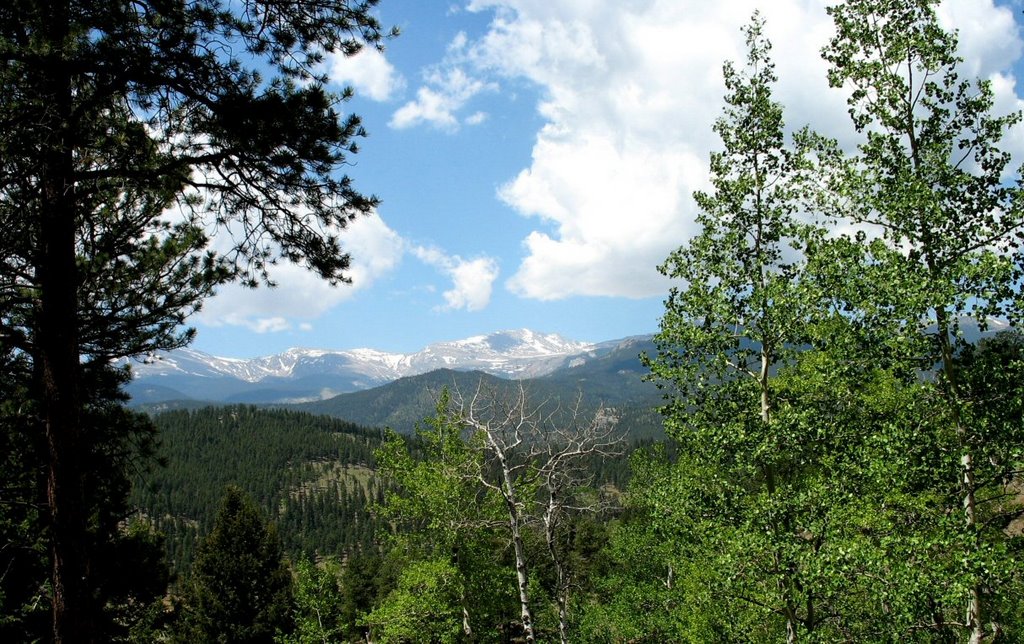
Our visit to a known location for Yellow Lady's Slipper on Thursday was a qualified success. First, because the headwaters of the Bear (above) were a delightful place to do field work, wouldn't you agree? (Don't forget to click on photos for a closer view if desired.)

Second, the Lady herself did put in an appearance, coyly peeking out from under her bangs, but she was not yet quite ready to reveal herself. We plan to go back Tuesday for a better view of her Ladyship's beauty. Once we reached the right bend in the trail, we scouted for a quarter hour or so before spotting this one flower, not quite open, and several more plants just getting started.

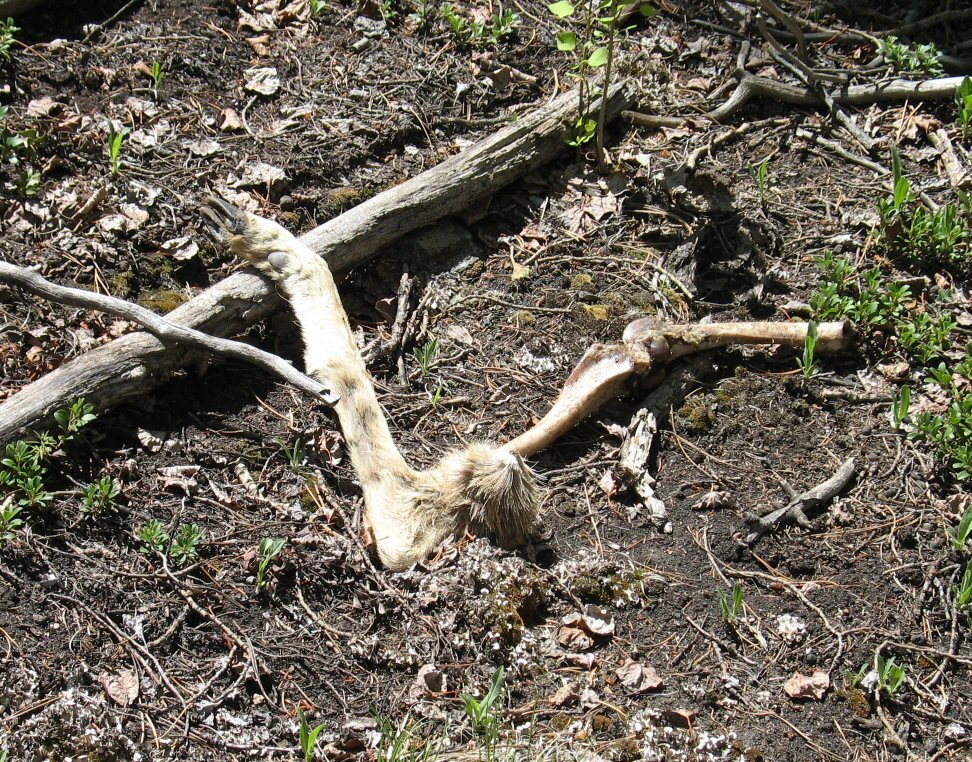
Tuesday we'll know exactly where to go, as several field signs now have the location distinctly registered visually. On a flat table behind a rock, we found a deer leg pointing the way. First one, then the other three. Just five feet from the flower, the final resting place, a pile of fur under a young Blue Spruce. Being of a naturalist bent, we quickly deduced we were exploring the vicinity of a Mountain Lion's dining room.

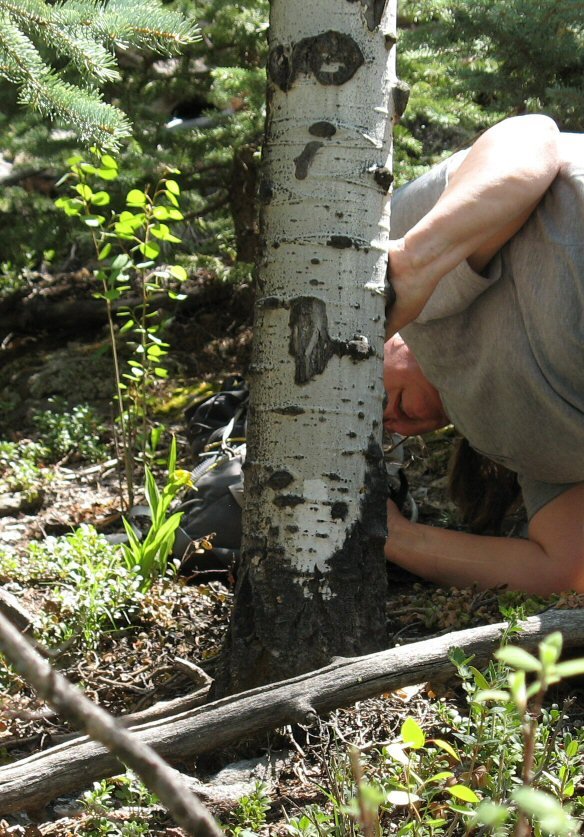
It's enough to make you glance nervously over your shoulder for the rest of the visit, and I did. Herp Pal, seemingly unperturbed, proceeded to demonstrate what it takes to get a good closeup of a flower in the field. Photos for this "inside look" at field tripping are below.

Who is the Lady so often cited in plant names? For more about her (or them), read on.


Thursday, June 01, 2006

To the Woods: Cypripedium

Herp Pal and I are off in search of the elusive Yellow Lady's Slipper orchid today. With any luck, we'll have an exciting post (with a photo! dare we hope?) for you tomorrow. Yes, I'm aware that orchids are not herps, but maybe we will return with photos of a scaly critter as well.

In the meantime, I've added an essay link from the Douglas-fir post of May 28th for your further exploration.

Monday, May 29, 2006

New Friend for Foothills Fancies

Foothills Fancies now has a companion blog. If you find you "just have to" have more to read than these short pieces, look for a link at the end of the posts to go to full length nature essays on similar topics. In the 1990s, I wrote a monthly nature column for local publications, and have finally figured out how to post some of these without clogging Foothills Fancies.

Thanks go to Linda Kirkpatrick of Upbeat for publishing more than 30 of these and to Jan Ratcliffe for her excellent pen-and-ink illustrations every month. It was a delightful project I'd like to tackle again; guess blogging is my way of doing that.

For now, an essay post is linked from Foothills Roses (see May 29). I'll go back through old posts this week and make a few new connections for previous posts where possible.

More Foothills Roses

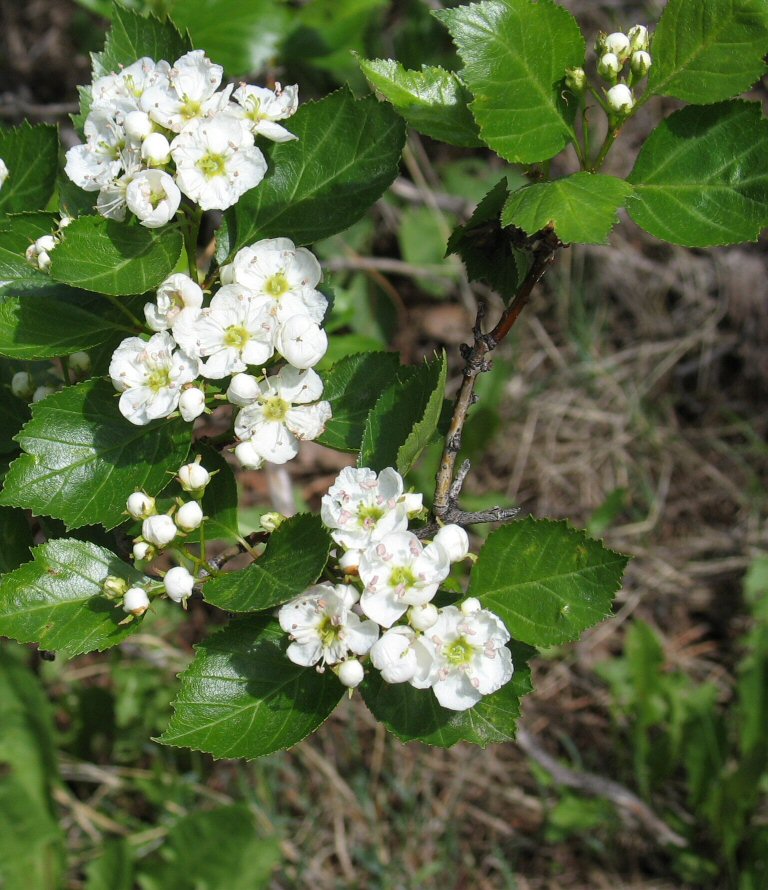
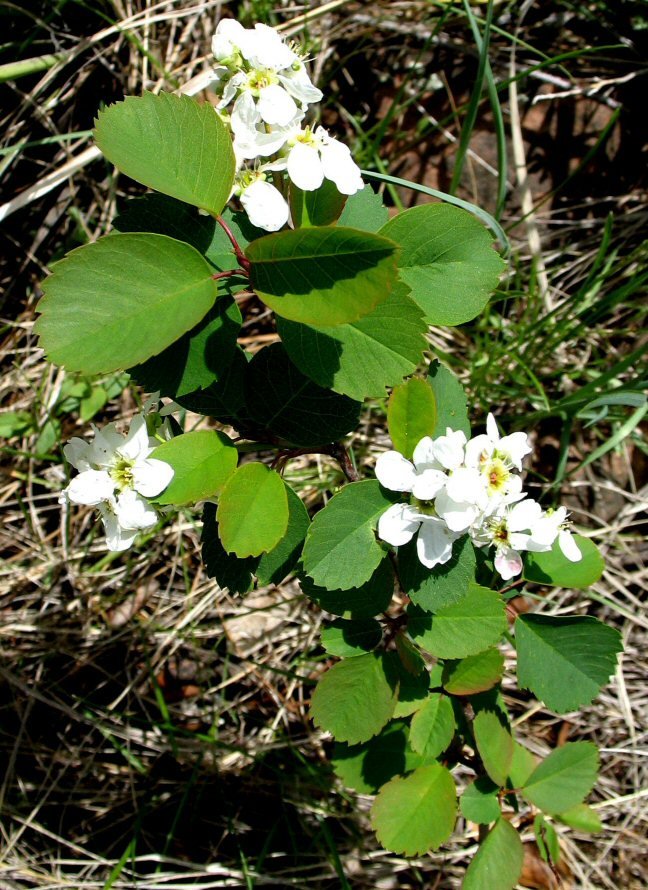
Yes, they're all roses, and all have white flowers. But you can tell them apart! Give it a try:

Longfellow says the Hawthorn buds "ope in the month of May." And he's right! Thorny as their name suggests, these foothills natives often grow in impenetrable thickets along streams and gullies. The dry fruits resemble rose hips, and, though usable in jams, are more tempting to birds and bears than to the rest of us. Note that the glossy leaves and innocent flowers develop simultaneously, making a striking white-on-green composition. Equally lovely, when the fruits mature, is their red-on-green effect against the leaves. Stop in later for fall color. In our area, Crategus erythropoda, Crategus macrantha (formerly C. occidentalis).

A smaller shrub, often equally thorny, is the American Plum. As shown here, with leaves just expanding, the flowers are past prime. So when the flowers first open, branches are bare, making this an easy rose to identify long distance! The large fruits are much enjoyed by birds, bears, even coyotes. Prunus americana.

One final Rose for today, the Serviceberry. Equally tasty (probably more so to humans) and less thorny, these are also found in the rosy thickets of foothills canyons. Fruits, this time, look more like blueberries than anything else. Best distinction, I think, is the smooth, round leaves, jagged only on the outer edge, and an unusual smooth purplish bark. Amelanchier alnifolia.

More on native shrubs in the Rose Family.

Sunday, May 28, 2006

Feathery "Fake Firs"

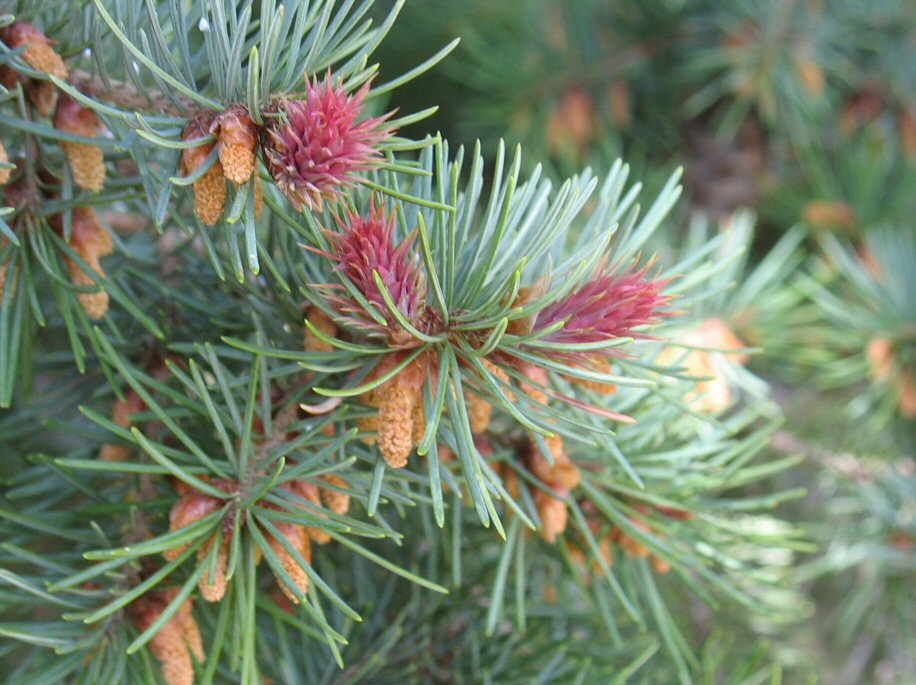
Not the "real" thing, but real in their own right, certainly, Douglas-firs confused botanists for a long time after they were discovered by western science. Collected in 1792 somewhere in the Pacific Northwest, they were first thought to be pines, spruces, or firs. In fact, Douglas-fir is in a class by itself, and 75 years later botanists gave it a new genus name. For our species, they settled on Pseudotsuga menziesii in honor of its discoverer, Scottish naturalist Archibald Menzies.

On our hike at Eldorado Canyon May 7th, I saw these early cones, seemingly for the first time. More likely I never paid attention before, but the deep magenta female cones just jumped out at me this time. Tiny prototypes of the finished "fruits," these are probably still awaiting fertilization by pollen from the orangish male cones also visible in this photo.

Just across the trail, same day but in a sunnier spot, cone development was much more advanced. I'm not sure with Doug-fir, but some conifers take years to mature their cones. These, I'd guess, ripen from birth to seed in one season.

As always, click on the picture for a closer view. More on Douglas-fir here.

Saturday, May 27, 2006

Bee Heaven

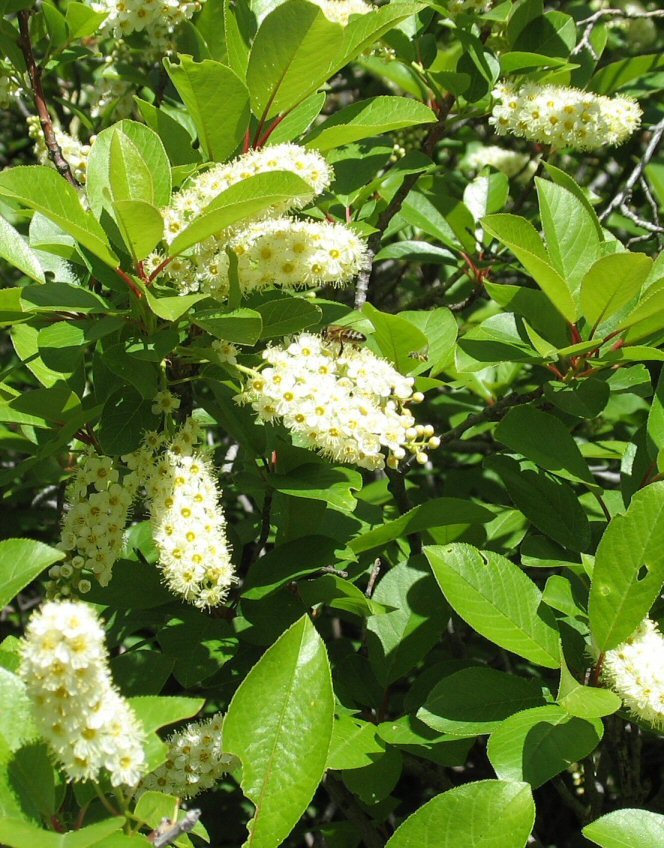
Our story today dates to the Red Rocks Park hike on May 16th. Can a shrub be a "wildflower"? Today's pick is Chokecherry, so see what you think.

Many of our flowering foothills shrubs are in the Rose Family, and Chokecherry is among the most abundant. It's distinguished in the field by its elongated inflorescences and flowers that come after the leaves.

Note that there's a honeybee nectaring on these fragrant flowers (and a smaller bee or wasp behind him waiting its turn). Honeybees are, of course, amazing pollinators, and not only produce honey for human (and bear) consumption, but also ensure the fruitfulness of many other crops. They are, in fact, domesticated servants of humans.

Turns out, just around the corner from this bush is a bee tree. Don't think I'd noticed the hive in this hollow Hackberry before as I'm usually drawn to the witches' broom decorating its branches, but Bee Lady was with me and she pointed it out. The Hackberry is not dead-- yet! These trees are normally very late to leaf out, and it has been weakened considerably by the witches' broom.

Looks like bee heaven to me-- a very short trip from a productive stand of Chokecherry to home and safety in the nearby tree. Foraging just a little further afield will enable these bees to find many more "roses" to pollinate. Our foothills shrubs surely benefit from all this attention!

[I have a nice picture of two bees heading into the tree home, but blogger insists on displaying it sideways. Sorry!]

Here's the rub (why must all our fine ecological stories seem to have a rub?): I learned, or was reminded, last week that our beloved honeybees were interlopers in this country, coming along with European settlers and even leading the way into the wilderness. It is said that the Amerindians were saddened when they saw the bees, because they knew the white man would soon follow.

Wednesday, May 17, 2006

A Prickly Pair

Monday’s walk at Red Rocks Park was full of flowers. With the late snows delaying the earlier species, and the later ones now beginning to bloom, it seemed like ‘everything’ was flowering at once! Or getting ready to. Shrubs, early and late wildflowers, and even a few cacti. I still haven’t caught up with the photos taken May 7th at Eldorado Canyon, but today we’ll have some fresher ones from Red Rocks, May 15th.

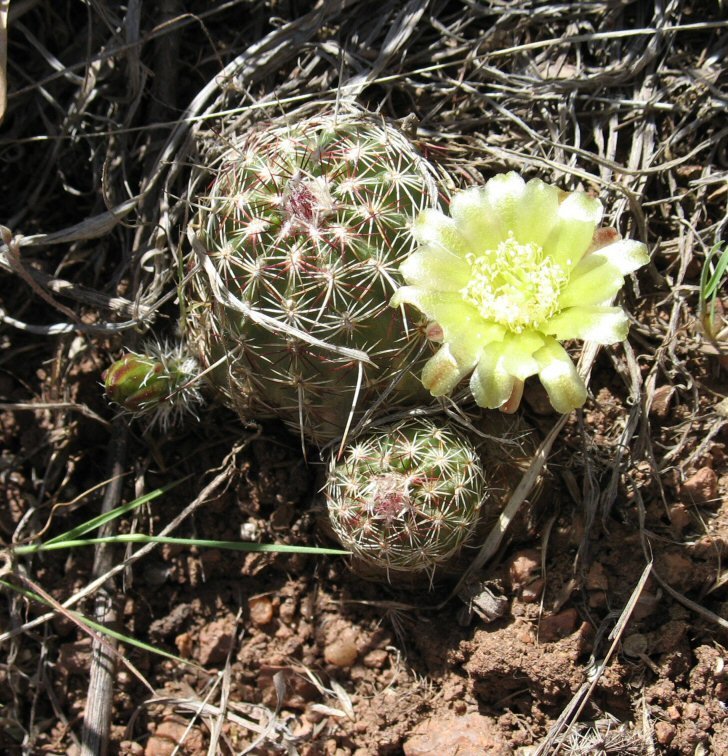
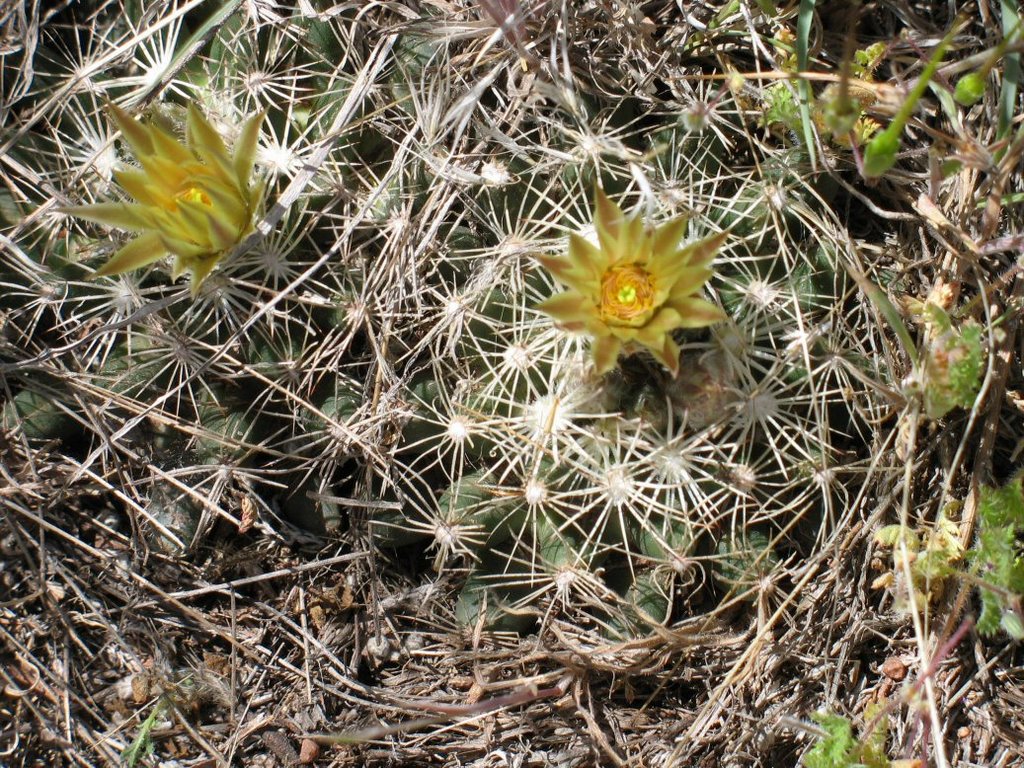
Besides the abundant prickly pear, the foothills offer these two ground-hugging cacti. They can be tricky to tell apart, so let’s take a closer look.

Most common is the “hen and chickens” or “green pitaya,” Echinocereus viridiflorus. (The species name means green-flowered.) It is more likely to grow tall (maybe 4-6 inches) and cylindrical than the second one shown here, and the spines tend to congregate on vertical ridges.

Flowers are just over an inch in diameter, to give you a sense of scale here.

Less often seen, in part because it can be so cryptic, is the nipple cactus, Coryphantha missouriensis. Short and compact, it actually withdraws into the ground a bit during the winter, making it even harder to spot. When in bloom, though, its yellowish flowers give it a little more distinction. The spines occur at the tips of protuberances, hence the name “nipple” cactus. In recognition of this feature, the genus was originally called Mammillaria. A similar species (C. vivipara) has pink flowers and is more unusual in our area.

Monday, May 15, 2006

Top Ten Reasons to Celebrate Mother's Day

We had, as it turned out, an amazing weekend and a lot to be thankful for. So here’s my list:

  1. A visit from the Husband’s Mother, otherwise known as MiL, who spent a happy weekend pulling weeds from the patio pavers.
  2. Knowing that the Other Mother (mine), was safe, well, and reasonably happy at her home on the other side of the Great Divide.
  3. An absolutely gorgeous weekend, sunny and seasonally warm on Saturday though cooler on Sunday. A weekend to be outside, and we were.
  4. The arrival, Husband says, of the Bullock's Orioles, one pair streaking through the yard. Our (well, his) first sighting this year, though others have reported them back for several days.
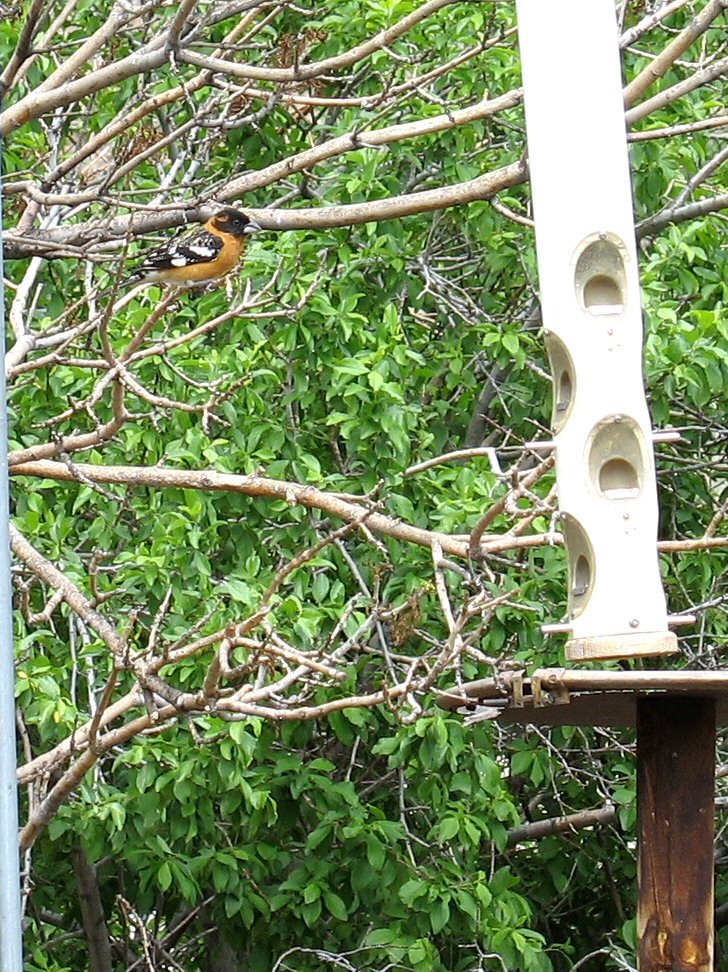
  5. Not one, but 3, male Black-headed Grosbeaks hanging about to provide company for the females who arrived earlier. We usually get to see the annual babies soon after they fledge.
  6. A BRAND NEW BIRD in the yard, in fact two or more of them, which are reported below.
  7. The digital camera, in the temporary absence of the bird book, with which to seek –and instantly get—a correct identification.
  8. The discovery that our live-in feral cat, Morticia, who escaped on Friday (giving me great cause for alarm), was safe in the garage with Baldur, our current top-of-the-pecking-order male, and the attendant relief when we maneuvered her back into the house last night. (Now if we could just get her fixed!)
  9. A great hike on Saturday, and making it to the top of North Table Mountain (and down again) in my inadequate condition, without excessive rebellion from my knees—and seeing lots of birds and flowers and no more than eight mountain bikers and (on top anyway) no leafy spurge! Coulda been worse.
  10. Seeing that almost everything out there comes in pairs, from the bunnies in the yard, to the finches, sparrows, mourning doves, and orioles, to, memorably, the swooping, cavorting pair of Red-tailed Hawks we saw from the rim of North Table Mountain. It is, after all, the Lusty Month of May!

And, Number 11, if I may cheat a bit, ALL THE FLOWERS!! Even without an adequate supply of April showers, or even March snowstorms, we are blessed with blossoms. Our moisture will, at least, get them started—but we’ll need something more to keep them going.

Mystery Bird of the Day

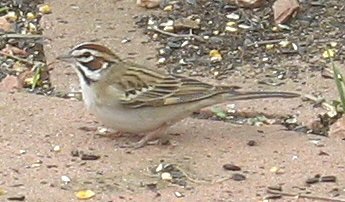
Truly, I had never seen this one before, and (like my first Western Tanager), I nearly laughed out loud! What a face—unforgettable. I was, of course, convinced it wasn’t a sparrow and was toying with some kind of Longspur, but couldn't put my hands on the bird book. Ah well, never said I was a birder. Shortly after firing a few photos off to Bee Lady, Cat Woman, and Hawkeye, all three answers came back within a half-hour of each other. It was unanimous: the Lark Sparrow.

Why here, all of a sudden? Will they stay? And why won't blogger upload the other image without turning it up on end?

There is, apparently, some evidence that bird ranges are shifting. Global warming? Wonder if the real bird folk know? Cat Woman reports that she now sees the occasional Horned Lark, a prairie bird, where she lives higher in the foothills. What else is changing?

Friday, May 12, 2006

More Foothills Gold


A little something for the bird lovers as well as the flower lovers this a.m. This little guy, an American Goldfinch, showed up a couple of weeks ago (4/28/06), right after that killing frost.

Still no orioles, but I did see a male Black-Headed Grosbeak. Lots more gold and orange in our future...

Shrubs for All Seasons

Two colorful native shrubs today offer different approaches to survival here in the foothills. Unlike the foreign ashes, they both came through our recent snows unharmed.

Here, Golden Currant (Ribes aureum) shows the strategy of a plant with northern affinities. Like its fellows in the Currant Family, its leaves start early, sometimes even in March, and resist frost. Flowers follow the leaves.

An alternative method is shown here by Skunkbush, or Three-leaved, Sumac (Rhus trilobata, once R. aromatica), which flowers well before the leaves begin to appear. You can almost see a leaf, just getting started, in the lower right of this photo. The flowers, by the way, are tiny, maybe 3 mm across. The Sumac Family has southern leanings, and our sumacs are cousins of cashews and pistachios.

Both these plants are volunteers in my backyard, planted by birds. Both produce small round juicy fruits that birds apparently enjoy and then deposit in likely places. Landscaping made easy!

Thursday, May 11, 2006

Resurrection

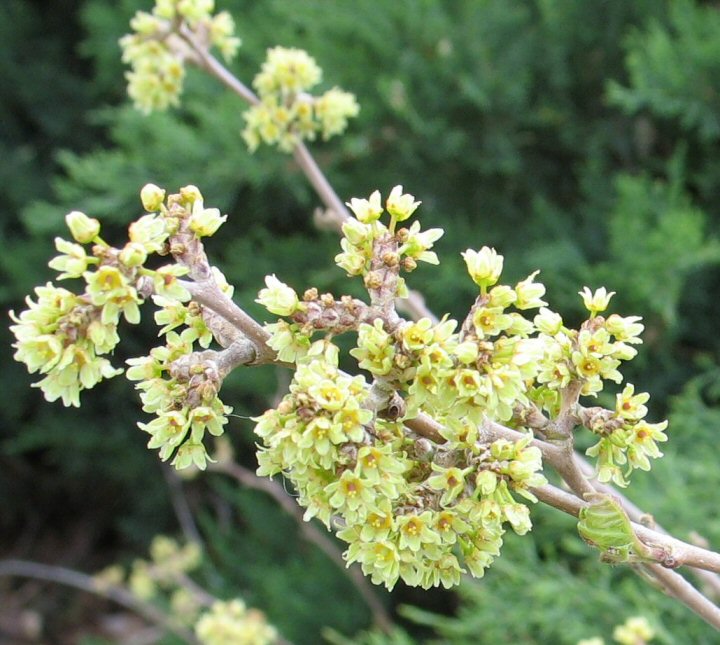
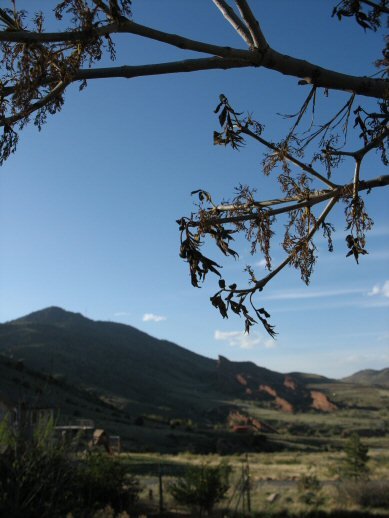
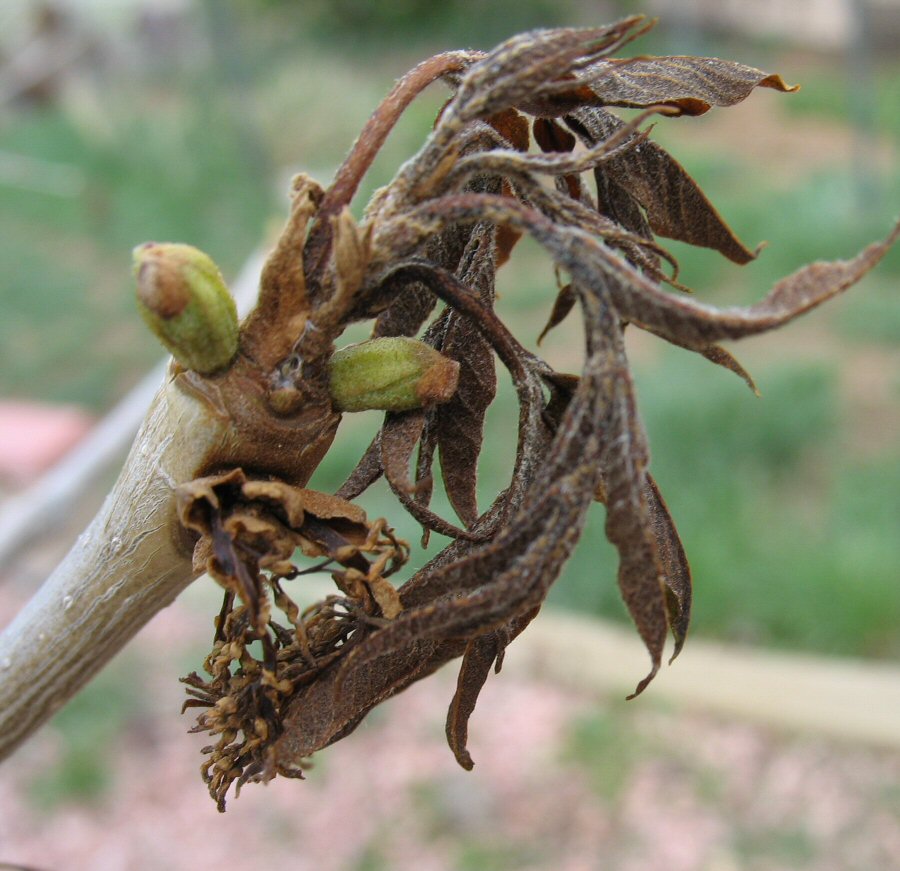
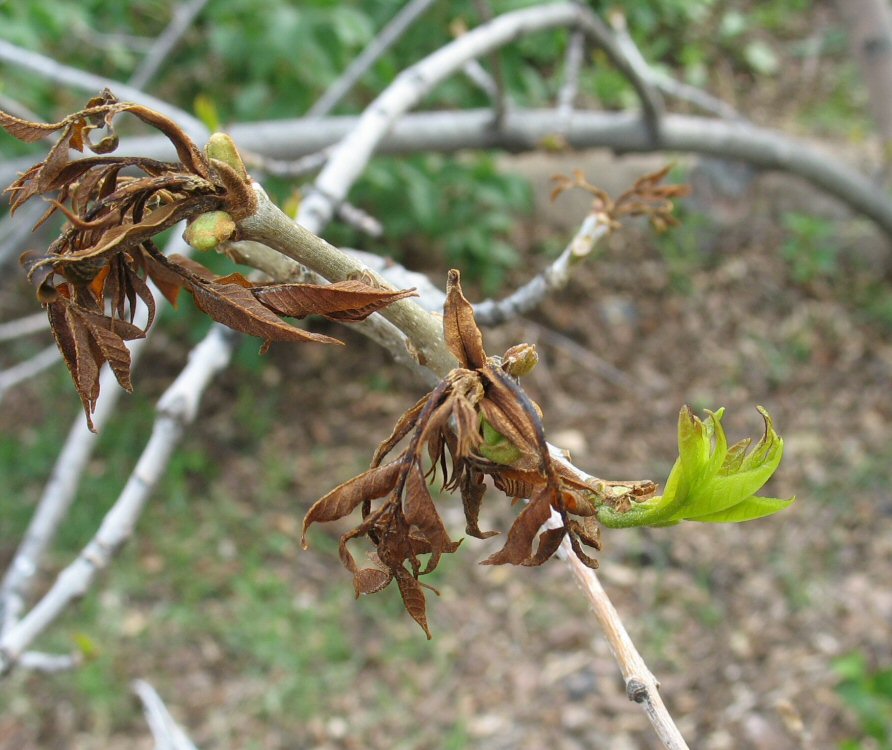
On May 1st, after the "lilac snow" of April 25th, the green ash trees were decidedly not green. They were, in fact, crisp. A beautiful spring day, and all the progress they'd made toward spring was eliminated overnight.

Now it's 11 days later and, even for the ashes, spring is returning. The sequence below indicates steps in the long slow process of starting over.

Wednesday, May 10, 2006

Spring Sunrise, Colorado Style


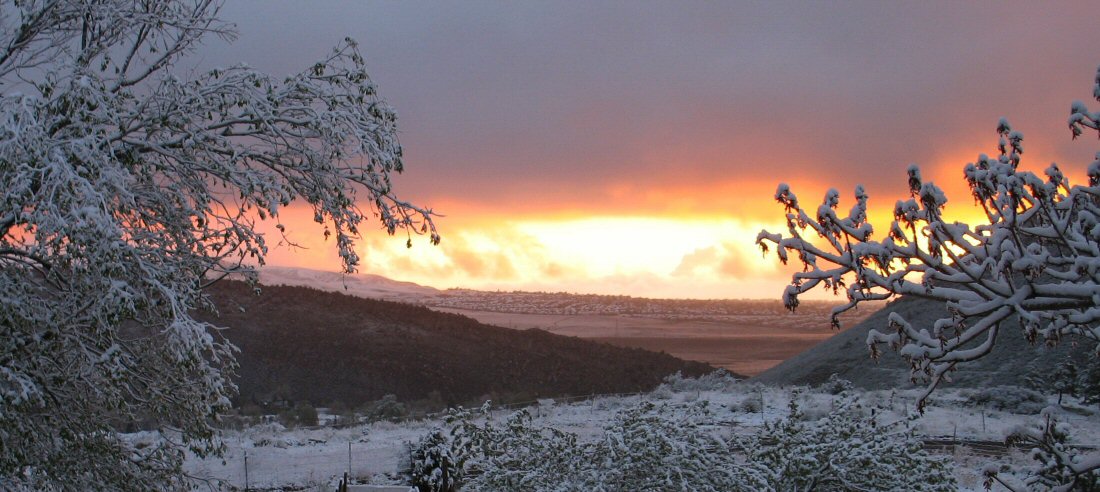
Here's looking at Denver. May 10!! An inch of snow!! Normal in the mountains, but not here! At least the sugar solution in the hummingbird feeder didn't freeze this time. It's a balmy 38 degrees out there.

Tuesday, May 09, 2006

Eldorado Gold

Our spring walk near Eldorado Canyon on Sunday was rich in rewards. Almost every spring flower and shrub imaginable was blooming--enough to satisfy my foothills fancies for a long time! So, finally, it's party time for plants here.

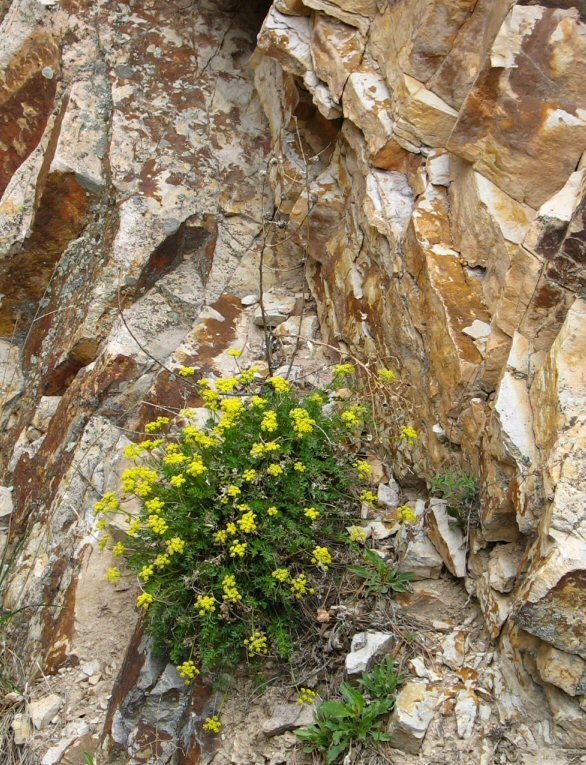
First up are two cousins: Whiskbroom Parsley and Mountain Caraway. In the deadly and delicious Carrot Family, these fall into the Rule 2 category: "don't pick, unless you really know what you're doing." But Rule 1, "don't pick" takes precedence in general anyway! Enjoy them and let them be.


Right: Mountain Caraway, Aletes acaulis, occurs throughout the montane, but clearly is fond of rock walls, banks, edges, and other dramatic options.


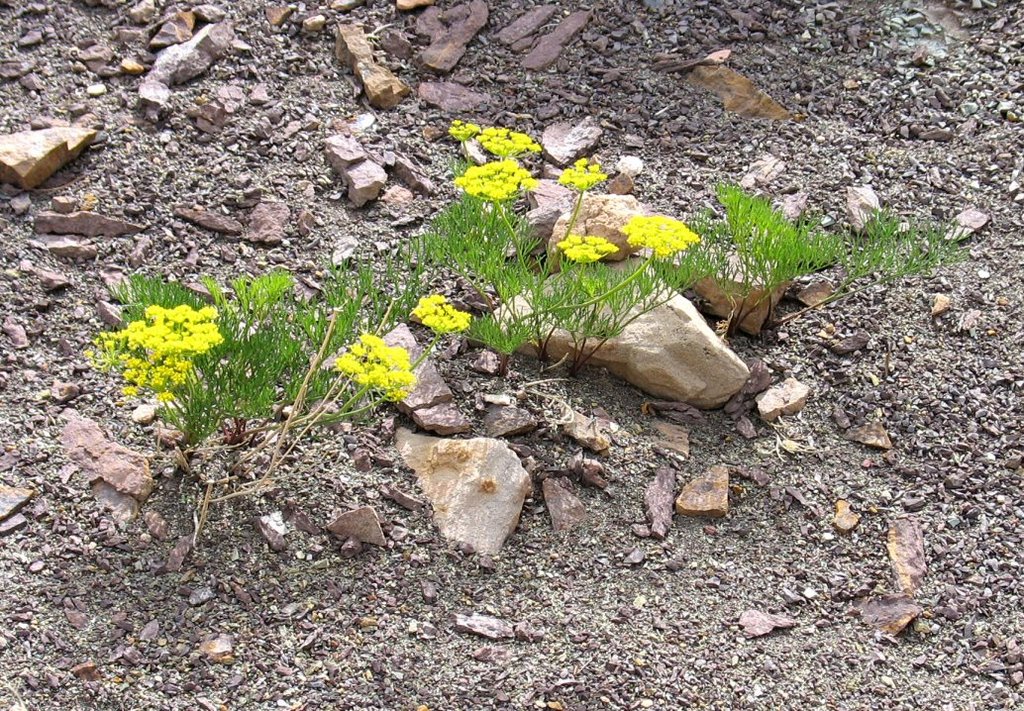
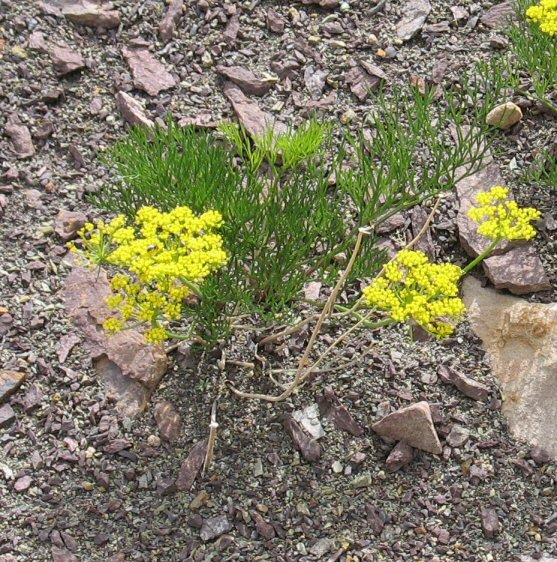
Right: Whiskbroom Parsley, Harbouria trachypleura, is also common in montane forests, and can be distinguished by its very narrow, finely divided leaves.

Montane forests, for those not around here, generally means forests mostly of either Ponderosa Pine or Douglas-Fir, at elevations from about 6,000 to 8,000 feet, with Ponderosa on the warmer or lower areas and Douglas-fir on cooler (e.g., north-facing) slopes. These plant communities mingle with shrublands (chaparral) on their lower edges and with dense coniferous forests of many species (but think spruce especially) at higher elevations. Okay?

What's nice about the montane zone, among many fine qualities, is that it's rich in flowering shrubs and wildflowers of its own, as well as some refugees from lower elevations. We'll see some of those in the days ahead.

Friday, May 05, 2006

The Usual View

Lost in fog this morning, though we do have a somewhat soggy visitor.

We first met "Baby Doe" in 1998. I remember, because it was a big year for apples and she came regularly to check out (and browse) our two trees and the many fine apples they produced that year.

Then she discovered chicken food, and we haven't figured out how to keep it available to the chickens and inaccessible to her at the same time. Since we've known her, she's raised several sets of twins, partly on pilfered Purina.

I was going to say that we're lost in fog, but really, from my place-centric universe, it's the rest of the world that's disappeared. Nice cozy feeling-- no Denver, no Red Rocks even, out there. And HUMIDITY! Always a thrill in Colorado to feel moisture IN the air. Seems like years since we've had this kind of rainy, drippy May-- and it's most welcome.

Thursday, May 04, 2006

She's Here!!

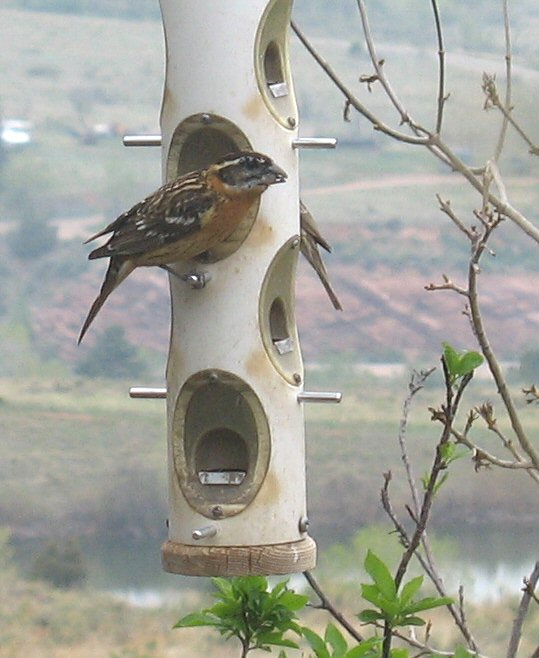
At least I think she's a girl... or maybe an immature. If the black-headed grosbeaks come back, summer is not far away!

So far she's all alone-- and looked a little hungry! Hitting the sunflower seeds hard... She disappeared minutes later, so I was lucky to catch her. Soon they'll be regulars at the feeder.

White-Crowned Sparrows

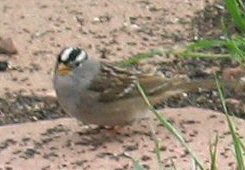
We have a small flock now of these little guys, but they've been camera-shy! Yesterday I was finally able to capture them, though with only moderate results.

Aren't they cute? Like a little flock of chipmunks dashing around out there. Three white stripes and four black ones certainly give them a jaunty air.

Still no sign of grosbeaks and orioles. Got to get out and look for wildflowers! Damp and drizzly today after some rain yesterday-- so it's great lichen weather too.

Wednesday, May 03, 2006

Wrong Again!

Juncos are still here after all. Their numbers are overwhelmed by the white-crowned sparrows, but yesterday there was definitely a gray-headed junco keeping me company while I sat outside. My informants tell me that they don't leave, they just migrate west to higher altitudes for the summer. And the bird book confirms that they do indeed breed here in the Rockies, the whole range just shifts a little west and north with the onset of warmer weather. Just shows I haven't been spending enough time in the mountains lately.

East-west migration is a pretty common phenomenon here in Colorado, where we can always find snow upstream if it gets too hot here in the lowlands. Contrariwise, the Stellar's jays often come down from Evergreen to visit when a winter storm threatens 10 miles up the canyon.

Tuesday, May 02, 2006

Spring is Here! For Real This Time...

Two absolutely beautiful, perfect days in a row. No snow even! Sunday night it actually rained, gave everything a brief but thorough soaking. Followed by more sunny days, but seasonally cool-- no immediate plunge into summer.

Artemis, "our" sharp-shinned hawk, breezed by this morning, a strafing run (or so the chickens thought it). She didn't stop for breakfast, or even pause. Just checking out her territory, evidently. And the juncos are gone. Takes longer to notice an absence, so I'm not sure exactly when they disappeared, but sometime in the last few days. Grosbeaks and orioles have, surprisingly, not shown up yet, but we're looking forward to their arrival. Only a few hummers are here so far.

Sand lilies (Leucocrinum) and Nuttall violets are blooming now, along with the ubiquitous salt-and-pepper (Lomatium). Will have to go check for more signs of spring. Husband and I did see a few pasque flowers on Earth Day, up the canyon at Dedisse Park in the ponderosa forest, where I was checking for my favorite ground lichen, a profusely branched Cladonia I've yet to pinpoint.

And that's all for today...