Thursday, March 29, 2012

Signs of Spring

This is like a guest post, only I couldn't talk anyone into writing it, so had to paste in tidbits from their emails to give you an idea what's going on here lately. Here's an up-to-the-minute report from the team of observers and correspondents out there, just like on the news. P.s.: there are flowers too, but not in this post!

From the Chemist:
I've been waiting for this sign for several weeks...the first baby black widow spider just made an unsuccessful crossing of my desk. I always get a hatch in my office about now. Generally I leave them alone and I think probably only one or so survives their cannabalism. They tend to occupy the same corners forever...hopefully (same, that is, not forever would be OK.) Cheers?

[Catwoman and I were crushed that he crushed the innocent little darling, but it seems clear that it would have lived, had it not been so indiscreet as to cross his desk.]

From Bee Lady and Flame, who recently returned from the South and west:
We had a great time in AZ, saw yellow eyed juncos, vermilion flycatchers, costa's hummingbirds, and lots of [California] poppies!

From Catwoman, who kicked these reports off back on March 21, 2012:
It's officially Spring, and so many animals are coming out of the woodwork here that I wanted to share some of the excitement!

Two pygmy owls began calling last week. I found a soft spot next to the driveway not far from the house to sit and listen for them. They call around dusk, and I had waited for a half-hour or so when I heard footsteps coming towards me that sounded like a person. It took four footfalls for me to turn my head and see the mountain lion that was only 20 feet away!! I said "oh s**t" in my head and jumped up and yelled something. The startled cat wheeled around and left lickety split. She didn't know I was there either...glad it was muddy so I could hear her coming.


This morning started with one pygmy tooting just before dawn. Ten minutes later, a half red-half black fox sat pretty in the front yard. On the way out, there was an all-black one hunting by the gate. And just after I got home, seven turkeys filed past the window!!

[Catwoman clearly has more aplomb afield than I would in such a situation. And her hearing is better! The fox story is another that should be told, but neither Catwoman nor I has the stomach for it.]

Catwoman also had an entire day of fame recently, when she won mention in the local Audubon photo contest but, sadly, finished out of the money. She was featured on March 8th for a photo related to this one, but you can check the other 249 featured winners at Share the View. Today's photo is particularly "striking." I hope you can figure this one out—really must get [her] around to blogging it sometime. Guesses, anyone? A great nature moment to share with kids.

If you get the impression I've been spending more time with Catwoman lately, you'd be right. That will have to be another story...


Thursday, March 15, 2012

The Ides of March

Cloud cover and dawn conspire to create a somewhat eerie feel to the air this morning, a sense of foreboding. In the East, the Sun is reaching mid-hogback, a sure sign of the approaching equinox. Somewhere in this direction, a lone bird chirps greeting. The Sun will rise about dead center of this view in another 15 minutes.


To the North, the usual scene is washed with pink and blue, and I think I hear geese overhead, but can't get visual confirmation.


Weather-wise, March has been quiet, having delegated its snowstorms to February. This week spring-like temperatures have eliminated February's white piles, urging bulbs and buds to sprout and people to shed the layers of winter. "Ides," however, is only half-way through; there's still time.

Evenings lately have brought the marvelous spectacle of the dance between bright Jupiter and brilliant Venus in the western sky. For a while, the Moon shared the view.

Turn 180, and the most russet Mars I've ever seen hovers over the hogback in the east, as if lit by internal rather than external fires. Still in Leo, as we see later in the evening as the sky darkens.

They say this year's spring equinox is early, at least for us! It falls on the 19th instead of the 20-21st. I wonder if the extra day of February accounts for some of that?


Wednesday, February 29, 2012

February in Review

Yesterday I saw my first Great Blue Herons of the season, even before this extra day we're getting in February this year. They weren't right here, mind you, but I saw two flying while I was driving to Boulder, then two more wading in a marsh when I got there. If herons come, can spring be far behind?

I think I saw a flock of swifts last week, too, and we've had whole rashes of robins chattering away in the trees most of this month. As I walked around the block a couple weeks ago, there were 20 to 50 birds generating a cacaphony in each of several trees: here in an elm, there a locust, another rash in a cottonwood. Sizable flocks of Eurasian collared doves have been with us all winter, for the first time in memory.

"February total snowfall to date is 20.2 [at DIA, on the 24th]. The record is 22.1″ set back in 1912." So close to being the snowiest February on record. Just to recap, here's an instant replay:


Tomorrow we head into what is normally our snowiest month of the year. Will it be different, after all this February snow? I can look back, here on the blog, on six Februarys now, and it seems snow is always there: more in 2007, less in 2008. This time of year, snow captures the camera's attention. Oddly, I tend to think of February as a dry brown month, kind of like the last picture above (and who wants to take pictures of that?). Perception reflects reality only with a greater or lesser degree of distortion.

Snow (again) is promised later this week, so we'll see what March brings. As you can see from this morning's view, our white ground cover is getting tattered and is due to be refreshed.

Happy Leap Day!


Saturday, February 25, 2012

The Blue Rabbitbrush Road

How native is native? We have to applaud the trend toward using more native species in efforts to reclaim natural landscapes after disturbance, don't we? Sometimes, unfortunately, the gesture backfires no matter how well intentioned it may be. Such was the case several years ago (about 2006?), when the Town of Morrison built a water pipeline through the local open space park (Mt. Falcon).

I'm sure the fact that the pipeline was going through publicly owned open space rather than private property simplified the approval process considerably and probably also stimulated the desire to plant native species so the pipeline would blend in. You be the judge: how did they do?

This photo was taken last June, many years after the project was completed. That swath of blue through the landscape gives this post its title.

The Plantlist shows 25 accepted subspecies or varieties of Ericameria but my botanical consultants, the Chemist and the Propagator, tell me this is likely to be Chrysothamnus speciosus var. gnaphalodes Greene, which is a synonym of Ericameria nauseosa var. hololeuca (A.Gray) G.L.Nesom & G.I.Baird. Native it is, but to northern NM, AZ, and most of Utah. The USDA profile shows his Colorado distribution as only in our county, a tad disjunct for a native, wouldn't you think?

Plantlist also reports “the genus Chrysothamnus contains no accepted names.” Shucks! I knew the genus had been changed, but I haven't quite accepted it yet. (Chrysothamnus has served me well during more than 40 years of acquaintance.) Sorry, botanical friends, I lean more and more toward "common names," the ones they always taught us were unreliable and unstable. Besides, I'm taking a broader ecological view rather than a taxonomic one, and it seems clear to me that this guy is a proverbial sore thumb who just doesn't belong! The gestalt simply doesn't fit. (In this photo, he's overwhelming the little green rabbitbrush guy on his left.)


You can explore our native rabbitbrush a bit further at this previous post. I mentioned the species's wealth of associations with insects, and our friend Ted at Beetles in the Bush provided this detail in the comments:

I love this plant because of the fantastic variety of cerambycid beetles (genus Crossidius) - large beetles with long antennae and vividly colored black and yellow, orange, or red - that visit the flowers. Like the plant they feed on, the dozen or so species show a dizzying diversity of forms (about 3 dozen subspecies are formally recognized) across the western U.S.

Photo of Crossidius coralinus fulgidus courtesy Ted MacRae. Read more at the link.

That's about one unique form of beetle for every unique form of this plant species in the western U.S. They say that a central tendency of ecological thinking is always to ask "and then what?" So I'm asking: what does bringing one new plant, subspecies or not, into a landscape bring in terms of insect associates? And what, pray tell, are the implications of that? As they also say in ecology "You can never do just one thing."

What does this mingling mean? CDOT is using this blue rabbitbrush on local highways. You can check it out along Hwy. 285 between Indian Hills and Conifer. Besides being an experiment in plant (and insect?) breeding on a regional scale, it's messing with what we perceive as "natural," perhaps as much as planting exotics. (Not advocating a return to that, though, okay?)

Along for the Ride
I don't know exactly what they planted, but blue rabbitbrush turns out not to be the only new face in the local landscape. There are other "natives" too! Native—but "improved"—cultivars of little bluestem (Schizachyrium scoparium, formerly Andropogon scoparium) and sideoats grama (Bouteloua curtipendula) are springing up in the roadside ditch downhill from the open space (along with blue rabbitbrush). No concerns about their fecundity! And recently, when the Husband and I followed the blue road down into the park to walk the Dogs, I found this treasure, which might be cliffrose! (Cowania stansburiana; now, apparently, Purshia stansburiana) If that ID is correct, it's far from its home in southwestern Colorado and Utah, but will certainly be an attractive addition to our local flora. Looking at the bright side, our species richness is expanding!

——
Thanks to the Chemist and the Propagator for consultation on this post. They are not to blame for errors and goofy opinions expressed herein.

Submitted for the February 2012 Berry-Go-Round Plant Carnival.

You can, of course, explore the range of diversity of rabbitbrush further at Wikipedia or at the USDA Plants database.


Sunday, February 05, 2012

What's Nice about Colorado...


...is that the day after a big storm looks like this. Blue skies, bright sun on snow, and, special blessings, clear roads! (Unless you're in the City or suburbs, in which case, good luck!)

It occurs to me that I'm always showing Red Rocks in the "from home" view, and rarely do you get to see the park from the inside. Yesterday about 5 p.m., we drove through Red Rocks Park to take in the post-snow views. First up is Park Cave Rock, lit by the setting sun.


For lack of a better plan, I'm posting these in the order they were taken. These icicles were just across the road from the first photo.


Then back for a closer view of Park Cave, whose warm west-facing scarp holds many nooks for roosting birds. Park Cave Rock forms the east wall of the Park's "southern gateway."


At the top of the Park, two final views. Looking east past Creation Rock and a waxing Moon, I couldn't resist tweaking this one a little. Yes, I enlarged the Moon. I had to update my photo-editing software this week, and it was a good opportunity to practice.


That's why the Moon is fuzzier than the rest of the image. For high-quality Moon pictures, please visit Beyond the Fields We Know. Cate's skills, equipment, and patience are better than mine!

As for me, I vow not to mess with photos overmuch, and to be sure to note it when I do more than crop, resize, or tweak brightness and contrast. FF celebrates reality, not photoshoppery. But it sure is tempting when you're confronted with a light pole in the middle of an otherwise interesting view, as below!


One thing I like about this one, actually taken by the Darling Husband, is the way the shadow of the mountains has engulfed the Park, and is approaching the hogback. Green Mountain also catches a few last rays, and the City, as ever, welcomes sunset later than we do.


Saturday, February 04, 2012

A Long Winter's Night


Snow started falling Thursday evening, just in time for rush hour. Though results were not, at first, impressive, dire forecasts calling for record amounts of white stuff turned out to be right on target. Yesterday was a howling blizzard, keeping most everyone close to home.

Forty hours later, we have about two feet of good wet insulation on the ground, and it's feeling much more like one of the spring delights March traditionally brings than anything we'd expect in February. This storm was thoroughly predicted, leaving no one unprepared. I was just surprised the weatherfolk were accurate this time!


So today, as the flakes finally stop and the sun even touches the rocks now and then, is a day for digging out. The cars are unrecognizable lumps in the driveway. The dogs have been finding great joy in romping through the drifts; not a single cat has been interested in exploring the new landscape.


Thursday, February 02, 2012

Rose-colored Glasses


It's as if the whole world is wearing them! Despite my usual view and the rising sun lighting up Red Rocks, I know that the "big picture" is anything but rosy, especially for those of us who care about the Earth.

This morning I've been reading around in Honest Ab's blog (no typo there), and even ventured over to his website. Dr. Stanley Rice is honest indeed, about our planet's situation and its prospects, no rose-colored glasses there. Too bad I didn't find him last week; he would have been good on our "rant" list! See his archive for July-Sept 2011 and scroll down to You Can’t Do Just One Thing and Our Great Big Opportunity for some entertaining reading.

Even the dog looks to be alert in this morning's dawn. He has few worries. His (and my!) advancing age mean that our chances of being greatly at risk in the coming "transition" are relatively slight, and diminishing with each passing year.

It's young people, and the young of all species, I fear for most these days. They traditionally "have their whole lives ahead of them"... but that isn't the joyous prospect it once might have been.

The rosy outlook above was fleeting, fading quickly into a grey cold day with promise only of snow.


Friday, January 27, 2012

Living with 2007

It was a pretty good year for me, all in all— a new job I loved, congenial boss, lots less stress, mellow home life, what’s not to love?

Unfortunately, that’s not the 2007 I want to talk about today. In the course of January’s big move (switching the putative “home office” into the guest room and vice versa), one of the things that went “out with the old” was my (mostly*) trusty Sony Viao. In with the new was a laptop I’ve used sporadically for a year or two and never learned to love. Monitor and usable keyboard stayed, though, and because “everything” is on external hard drives, the transition was as seamless as possible.

(*with the exception of a couple of killer malware infestations)


Except for Windows 2007

I can’t tell you how much I hate this program.* Some may say it’s a sign of stick-in-the-muddedness, but I am willingly learning lots of new things— getting along fine with the new Thrive and its various interfaces; trying out awesome new culinary tricks; coping, more or less, with new “procedures” at the office; even changing my eating and exercise and work habits. Honest! Dealing with my office and clutter, for goodness sake!

*But I’m going to try anyway.


But, time and time again, Windows 2007 trips me up. Just when I think I’ve got it down, mastering the new “Ribbon” in MS Office, for example, it turns around and bites me in the butt in some surprising new way.

And every time it does, someone on the listening end of my rant will say “get a MAC.”

I’m an old DOS hand

Perhaps some of you out there are old enough to remember when you had to tell a computer what to do, instead of having it guess what it thinks you want to do. We even had a saying “computers don’t do what you WANT them to do; they do what you TELL them to do!”

Good ol’ DOS. On days when 2007 seems determined to stymie my every effort, I remember DOS more fondly than usual. In the DOS days, it was possible for someone without a degree in computer science to understand, in a basic way at least, what a computer was actually up to. There were disks, or “platters,” that spun at 3600 rpm, a “motherboard” you could see, little “beans” that added more RAM, and “hard-wiring” (also visible). There were peripherals in those days, and ports in two flavors, and buses and “scuzzies” (SCSI). And an awesome immune system! This nice screenshot is courtesy of Wikipedia which (naturally) has a DOS page. “AUTOEXEC.BAT”— man, that takes me back! Note, please, the complete absence of GUI interfaces, icons, bells, whistles, animated gifs, popup menus, and other nuisances.

Briefing for those born after 1980: DOS stands for Disk Operating System. Once upon a time, a computer screen was a tabula rasa (sorry, I mean, blank slate; folks born in recent decades may not know Latin either), a black screen on which you could type sweet easy commands (many less than 5 characters long) to get the computer to do things. If you needed the computer to do something really complicated, you put all the commands into a text file called a "batch file" so you didn’t have to type them every time you wanted to perform that string of commands. (Courtesy Bundesarchiv, B 145 Bild-F077869-0042 / Engelbert Reineke / CC-BY-SA, via Wikipedia.)

Some bigger programs were developed to help, with names like Lotus 1-2-3 and Wordstar. They successfully performed functions akin to those of MS Office, entirely without resorting to a Ribbon! Wordstar, in particular, used a bunch of keyboard shortcuts that made things easier. Wheee… In about 1985 or so, someone said “Don’t bother to learn those; they’ll be obsolete soon!” Guess what? It’s been almost 30 years, and we’re still using the exact same commands! Even Mac has had to adopt them.


Big MAC is not the answer

Then the Steves decided it’d be better if we didn’t know what was going on inside that shiny metal box. Or that we shouldn’t have to be bothered with all that. In the name of accessibility and freedom, they relieved us of responsibility and made the computer a true “black box.” Those of us who think more verbally than visually found ourselves to be icon-impaired and consequently handicapped in our ability to function.

As others have noted, the success of the Macintosh Apple made all other fruits pale in comparison. It was no longer enough to be juicy and sweet, now you had to look more and more like the rosy red apple of temptation. And Microsoft was nothing if not adaptable: with every generation, its operating systems got “easier,” more “user-friendly” and “intuitive,” and its GUIs grew gooey-er than ever. (McIntosh apple image, not to be confused with Macintosh Apple. Lars Zapf at Flickr, again via Wikipedia.)

The frustration grew accordingly. But like all caught in the throes of evolution, one must adapt or die. And so we struggle on, slowly coming to understand that a “bucket” means “fill,” or “A” means Font but “B” means Bold. And a funny little brush now means “Paste.” I haven’t seen a paste brush since the bathroom had wallpaper!

Has my life improved?


All this is not to say I’m ready to go back. I do understand we can’t. I don’t covet the 10 MB hard drive of my original XT (yes, total capacity; now I have images bigger than that!) or the reassuring click of the XT keyboard I once thought I couldn’t live without. I’ve learned to adapt, just as I did with losing the IBM Selectric that was also once indispensable.

Life goes on, and by and large, computers are more fun now. I love having Wikipedia at my fingertips; love being able to email and blog and tweet and doctor photos and keep up with what other people are doing. I love the vastly expanded learning capability that computers and the internet offer, although I wonder, now and then, if we haven’t outsourced our brains. (Yes, I still keep whole poems, and phone numbers, in my head. I’m old school.)

Maybe someday, I’ll be able to say “how will I live without Windows 2007?” But not today.

A Word about Rants

Rants are fun to write; I also often find them fun to read. Maybe I’ll write more rants in 2012. That’s a good goal, eh?

We all have something we can rant about. Here are a few of my “recent favorite” rants:

Wow, "rant" is even in the title of that last blog. And they have a cocktail hour! 'Scuse me, I'll be back later.


Monday, January 09, 2012

Just a Dusting

After all those clear, warm days (even to 60s on Thursday; 15s C), clouds and white-out conditions rolled in Saturday afternoon. Left us with only a few inches/cm, though. Sunday (1/8) arrived bright and clear, but white and cold.


This is the first "view" north of the new year, and an appropriate one. With two nice snowfalls in December, our White Christmas was assured, as well as some relief for the trees and shrubs that depend on winter moisture. Sad to see other parts of the country are still waiting. Need snow? Check out winter in the Lanark Highlands, courtesy Kerrdelune. Her photo today is even more lovely.

If your wintry days need brightening with blossoms, visit the December Berry-Go-Round, hosted by the Roaming Naturalist.


Saturday, January 07, 2012

Why I'm Not a Scientist

I heard about the Fibonacci series and said "That's cool!"

Aidan didn't stop there.

Incredible story! HT to Botany Photo of the Day!


Friday, January 06, 2012

Good Year


This morning was not quite this garish; softer and more delicate really, to my eye. The Sun is just barely, not even visibly, advancing northward from his extreme position, just as last year. Another swing around the Sun.

All the days of this year have been glorious thus far, with clear skies day and night, a waxing Moon, Venus in the evening, and Jupiter (still working his way across the southern sky) now high at prime viewing times. At dusk, Orion will be charging up from behind the hogback barrier above, as the Winter Hexagon hangs above and around him.

Just glorious!


Monday, October 24, 2011

Coyote Coincidences

On Saturday (10/22), I saw my first coyote in quite some time.* Up close and personal, he stood behind my car as I was leaving the office at 9:30 a.m. Big, beautiful, and apparently bold, he looked back at me from the rear-view mirror, then calmly ambled off to watch me from a different angle before disappearing in the brush along the creek. (Yes, our office location is really neat!)

The camera was there, but wildlife photographer I'm not, so it didn't cross my mind until later. We'll have to make do with my old illustration. Unfortunately, it also didn't occur to me to do more than quietly observe him!

If my haphazard blogging can be trusted, it's been almost three years since we've seen coyotes around the homestead, 3.5 since we've lost a cat to one, and only in April 2004, I think it was, did we lose chickens to them. With the cats we're never sure; they just disappear and we make assumptions. (But other possible culprits include great horned owls, foxes, and maybe even mountain lions.) The chicken event (15 chickens dead and dying in one afternoon) provided direct visual confirmation of the perpetrator.

But my sighting Saturday turned out to be timely. The day before, Cat Woman lost her cat and heard from a neighbor that there was a big coyote in her area. Putting one and one together, she found the sad evidence, confirming the cat's fate. In her rural area, residents routinely kill coyotes, so she didn't expect one; she worries more about mountain lions.

The week before, my sister—far down in the southwest corner of the state—also lost a cat. Suddenly, coyotes are back on my mind, and apparently, back in business.

Coyotes have had a lot of press lately in the Denver metro area; this recent article serves as an example of the concerns and the lethal response too often being applied locally. (Although, in California, one neighborhood is taking a less belligerent approach.)

They are truly our urban/suburban wild dog: we provide excellent habitat for them and have created a new breed of this canine with the wily reputation. Eons ago in grad school, I researched coyotes for a wildlife class, and learned that there was evidence that, when persecuted, coyotes produce larger litters, and also grow smarter, stronger, and faster. Killing them isn't necessarily going to help! Nature... vacuum... you get the drift.

With decreasing wild land for habitat, coyotes have been quick to learn to live with us. They have to—after all, we're everywhere these days! We have not been as quick to learn to live with them. Some people don't understand the concept of "wild" and insist on feeding whatever cute animals they see in parks or neighborhoods. That doesn't help, especially when dealing with medium-size predators.

Denver has posted lots of information online to help citizens learn appropriate behaviors toward wildlife in the city.** In the case of coyotes, active hazing programs are important to teach them appropriate behaviors toward humans. Now I have a better idea of what to do when I see one—for the coyote's sake!

More personal thoughts on living with predators over at Small Wonders.

Two more coincidences. * Actually my previous recent coyote sighting was when I flew back from Indiana, just a week before this sighting. Carl the Coyote was the whole 'nother animal that graced the tail of my Frontier jet.

** Thanks go out to Ashley DeLaup, wildlife specialist for the City of Denver, who created all that great material I linked to above and conducted educational programs for Denver's citizens. This fall, Ashley was laid off. Go figure.


Saturday, October 08, 2011

First Frost

May their seeds be safely scattered
As the annuals hang their heads
May the snakes all safely find their paths
Back to their winter beds.

May next year's buds be safely wrapped
In shrouds of green and brown
And watch from higher branches
As this year's leaves drift down.


With their fledglings safe about them
May birds find a southern home
May bears be fattened, safe in dens
As once more they cease to roam.

May scrub jays find they've safely stored
Enough ripe seeds away
To last them through the season
Til another bright spring day.


In the meadow on the mountain
Where the elk are bedded down
May the grass be always lush and deep
As they rest on mossy ground.

The hummingbirds have scattered
Before the cold front's blast
In Argentina's flow'ry fields
May they find safe food at last.


May the little frogs find safety
In deep mud and warm
In the pond amid the forest
May they winter without harm.


May lichens soften in the mist
And softening, turn to green
In dampened autumn weather
Their best days will be seen.


The aspen is a spendthrift
Dropping leaves of trembling gold
May its forests prosper likewise
As this year grows old.


May the bluestem on the hillside
Shining ever in the sun
Glowing red, embrace the frost
Minding not that summer's done.


May the big skunk in the henhouse
Stealing our eggs
Scuttle safely 'neath the coop
On short, fat, little legs.

May the stars again gleam brightly
Once clouds have cleared away
Orion's winter's in the sky
And Scorpio's gone to stay.


Autumn is upon us
Winter's icy breath we feel
May all beings greet the coming year
As again we turn the wheel

May all here on the homestead
Prepare to do their parts
To welcome winter's shelt'ring snow
Holding summer in their hearts.

The Coming Post

Yes, there will be another post. As of this morning, it looks to be coming soon. My absence here has not been a dearth of things to write about, not even a spidearth. Perhaps we can attribute it rather to an EXCESS of things to write about. Much to say, little time to say it. Or, as another blogger tells me "time, discipline, and motivation." Or we could blame it on the tablet, and free downloadable books. (I have 14 draft posts sitting out there in limbo, and 6 of them were created this year. Good grief!)

Tsk, tsk... an entire month without a post! There goes my 2011 record. I've failed to announce the latest Berry-Go-Round, and even the one before that! September's edition of the plant carnival was posted at A DC Birding Blog (yes, plants and birds are related), and August's was nicely handled by Dave at Osage Orange.

Osage Orange tells me October 6 was Poetry Day. Well, missed it by a couple. By way of explanation, the coming post is part Irish blessing, part catalog of the summer's experiences and encounters, a quick review of all the things I'll probably never get around to blogging about. But wish I would...

Today, this morning, frost is creeping up on us, and there's this weird white stuff in the air. We're perched on our usual line between places that only get wet and places that get actual accumulations. No wonder I'm blogging; I always seem to be motivated by that weird white stuff. Because of the weather, I'm finding myself in a reflective mood, perhaps almost a depressive one. It's not a cheery day out there or in here, but after many many many perfect bright-blue 80-degree Colorado days, we're due for a change.

Back soon! Promise!


Sunday, August 21, 2011

Alive in the 21st Century

Yesterday, the Husband and I finally broke down and went to the Big Box to look at ummm... devices to upgrade our technical communications skills. You know, things that teenagers today take for granted and take everywhere. It was a crash course with a lot of new jargon to absorb—about 4G and 3G and wireless hotspots and dual-core mobile processors and adaptive display technology. Makes you wonder how thousands of generations of humans got along without these important necessities.

There were things that sounded delicious, like Honeycombs and Gingerbread and Cupcakes, but just made us hungrier. We were Inspired and Captivated; our imagination took Flight; we were surprised at the Incredible Intensity with which we could explore the Galaxy, even the Cosmos. It's truly a Revolution, and it hit us like a Thunderbolt. All very sci-fi, with Droids and Comets and Photons—wheeee! We Clutched each other with diminishing Status as the price tags added a little Gravity to the situation and Restored our Touch. Can we Prevail? Are we ready to Thrive?

Sigh. Now I have Tablet Envy. It's only a matter of time. Maybe I'll even be a better blogger??


Thursday, August 04, 2011

Summer Berry-Go-Round is here

July's plant carnival, Number 42 in the Berry-Go-Round collection, is elegantly hosted at Beyond the Brambles. Kate leads a merry and colorful romp through the plant kingdom, and the rainbow! Check it out for some great plant-related reading!

I've been scarce here all summer, but I keep hoping things are going to change... soon! Despite a long string of 90-plus degree days, we've had enough rain, now and then, to keep the hills green, even into August, reminding us of what Colorado used to be like... back in the last millenium. And with it, of course, a memorable show of thunder and lightning!

Hope your summer is memorable as well...


Friday, July 01, 2011

Expect More from Berry-Go-Round!

In the hands of "Mr. Subjunctive," the Berry-Go-Round plant carnival takes on a whole new flavor. Several in fact, as he presents BGR #41 as an 8-course tour de force, henceforth to be known as "The Formal Dinner BGR."

What an excellent menu he's prepared!! From soup to nuts, and beyond, Mr. S introduces us to a whole cast of dinner guests, many of whom are sharing the BGR feast for the first time. That means I got to learn a lot of new things and be introduced to a variety of cuisines I might not have encountered otherwise.

Wait'll you see what's for dessert!

Great job, Mr. Subjunctive! Thanks for hosting...

[Could someone please pass the bicarb...?? I may have overdone it.]


Saturday, June 11, 2011

Lost in the Night Sky

Imagine being able to go zooming around the universe, exploring galaxies at will and taking a close-up look at any features that caught your eye! Perhaps you've always wanted to see the Pleiades in better detail, or get a clearer look at the Garnet Star. Whatever you wish to examine is laid out before you in the Photopic Sky Survey, an ambitious effort by Nick Risinger.


According to the website, "The Photopic Sky Survey is a 5,000 megapixel photograph of the entire night sky stitched together from 37,440 exposures." As a result of an entire year of Nick's dedication and creativity, we have an unprecedented opportunity to wander among the stars at last.

Images used by permission, copyright Nick Risinger, skysurvey.org. (As always, when you find something you like on the Internet, consider making a donation to support quality content online!)


For various reasons (overcast, fire haze, etc.) I've been missing the night sky of late, and my opportunities for astro-posts have been limited. Failing regular observation, I lose track and get rusty—where is every[stellar]body? Refresh your memory at this site, and you'll see things you never could before!

So where in the galaxy is the photo above? With Alnitak and Alnilam in the upper right, this is a zoomed image of Orion's belt and sword, showing the large red Horsehead Nebula near Alnitak. If you don't know the names of the other nebulae here, check the link above for the labeled 360° version and go zooming!

What a way to compensate for a cloudy evening! Thanks, Nick!

A New Universe

I discovered SkySurvey because I finally ventured out on Twitter about May 15th, and this site was featured on @APOD, the Astronomy Photo of the Day, on May 20th. (See an index of all APOD's photos for more awe-inspiring sky-related images. Follow @APOD and the Twitterverse will deliver the mysteries of the cosmos daily!)


Thursday, June 02, 2011

BGR--At Home in Alaska

The latest edition (#40) of the Berry-Go-Round plant carnival is making itself quite at home in Sitka, Alaska, thanks to Matt's creative editing! He managed to tie each and every post, including FF's previous post on gillyflowers, to a Sitka relative. Pretty cool, Matt—and nice work all around!

Lots of great botanical reading is provided: from ferns to coralroots, caryophs to coffee, with a little peat and pussytoes for good measure! Go check it out... if you like what you read, please don't forget to leave encouraging comments. Next edition will be hosted at Plants are the Strangest People.


Wednesday, May 25, 2011

Clove Gillyflowers: A Botanical Ramble

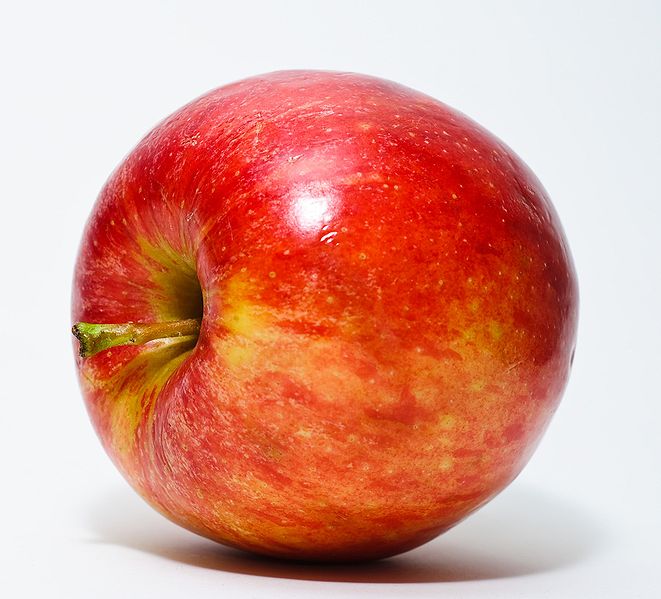
As with our eviction from Eden (a botanical story in itself, it turns out), it all started with an apple. At a historical symposium recently, we were talking about an old apple orchard that survived on a historic homestead in Westminster, Colorado. Do you know the name of the apple?, I asked, and the answer led me into temptation.

Apple image by Abhijit Tembhekar from Mumbai, India, source: Wikipedia.

"Sops-in-wine," I was told. Oddly, I had just read that very name in American Household Botany, a useful compendium of botanica I'm currently reading. But the name, sometimes known as "Sops-of-wine," was not applied (in the book) to heirloom apples. Off we go then!

What are sops? The noun, we understand, refers to "a piece of food dipped or steeped in a liquid," from the Middle English, soppe, and allied to, of all things, sopaipillas, which derived from sopa, or food soaked in milk, apparently of Germanic origin. About the only use of the word I can think of nowadays is in the adjective form, sopping wet. (Except for a friend of mine, whose 17 years in old Mexico taught her to make a mouth-watering sops of bread in red chile sauce.)

Sops of Wine is described by Big Horse Creek Farms as an "excellent early summer apple which grows well in all regions of the South. Its exact origins are unclear, but Beach (1905) says it is an ancient English culinary and cider apple. Fruit medium to large, slightly conical, with greenish-yellow skin covered with dark red faint red striping. Flesh is yellow and often stained with pink"—just as if it had been sopped, or soaked, in wine. Whether it actually was ever sopped in wine is, I suppose, another story.

Another plant truly was sopped in wine: the Clove Gillyflower, to which the name "sops in/of wine" is also applied. We've all seen these flowers, we just know them by another name: Carnation (Dianthus caryophyllus and others). John Parkinson described “gilloflowers” in 1629, in his “Paradisus Terrestris.” He notes:

To avoid confusion, I must divide Gilloflowers from Pinkes and intreats of them in several chapters, of those that are called Carnations or Gilloflowers as of the greater kinds in this Chapter; and of the Pinkes as well double as single, in the next. But the number is so great that to give several descriptions to them all were endlesse… I account those that are called Carnations to be the greatest, both for leafe and flower, and Gilloflowers for the most part to bee lesser in both…”

Parkinson thereafter names some nineteen types of Carnations and 29 of Gillyflowers, not including the small wild gillyflowers he calls “Pinkes.”

Dianthus, literally from the Greek, means “divine flower” (dios plus anthos). It is in the family Caryo-phyllaceae, and the specific epithet of Gillyflowers, D. caryophyllus, adopts the family name. The carnation is also linked to cloves, and was once called “clove pink” for its scent and frequent use as a substitute for the expensive imported spice.

The clove tree, dried buds of which are the familiar spice, was Caryophyllus aromaticus L. (caryo meaning nut, and phyllus, of course, leaf). (It is not, however, in the Caryophyllaceae, but in the Myrtaceae, where it is now known as Syzygium aromaticum (L.) Merr. & L.M.Perry. Go figure.)

The English name Carnation is often thought to be derived from the Latin for flesh, as in carnal or carnage, which many of us associate with the color red. In fact, according to Webster’s, the carnation was originally “flesh-colored but now found in many color variations.” An old alternative, dating to the 16th century, connects the word to “Coronation,” in reference both to its common use in “weaving crowns or chaplets for the head, or as Lyte has it, from the flowers dented or toothed above—like to a littell crownet.”

Whence "gillyflower"? Wikipedia suggests this one is a corruption of the French giroflée, which translates the original Greek karyophyllon. Which puts us back to cloves again.

Should you not wish to adulterate good wine by soaking carnations in it, this same Wikipedia article offers a recipe for making wine using only gillyflowers, if you happen to have a peck of them on hand.

An old recipe for gilliflower wine is mentioned in Cornish Recipes Ancient & Modern dated to 1753:

“To 3 gallons water put 6lbs of the best powder sugar; boil together for the space of 1/2 an hour; keep skimming; let it stand to cool. Beet up 3 ounces of syrup of betony, with a large spoonful of ale yeast, put into liquor & brew it well; put a peck of gilliflowers free of stalks; let work fore 3 days covered with a cloth; strain & cask for 3-4 weeks, then bottle."

These days, it's a challenge to find carnations that smell like cloves or anything else. I suspect our modern "gillyflowers" would not make a very fragrant wine. Maybe the apples would work instead!

——More References
A Sales Manual on Colorado Carnations, by the Colorado Flower Growers Association, Inc. circa 1960s (includes an extensive history chapter on this flower, quoted above; online at Colorado State University).

Cloves, Picotees, and Sops in Wine, a nice essay on Cottage Gardening by Barbara M. Martin.

American Household Botany: A History of Useful Plants 1620-1900, by Judith Sumner. 2004. Timber Press, Portland and Cambridge. 396 pages.


Friday, May 20, 2011

Spring-worthy Weather?


It's a truly glorious morning today, after days of hail, rain, tornado warnings, and other assorted delights. All of which (okay, some of which) have been deeply appreciated after our lack of serious snowstorms here in the lower foothills these last few months. Still some white on Mt. Morrison, but a rosy dawn and clear skies highlight the greening we have at last.

And, just this a.m., the most spectacular frost patterns we've had all winter, right there on my car windshield! On May 20th, such visions are ephemeral indeed!

Sunday, May 01, 2011

April Showers Bring... a New Berry!

Earth Day and Arbor Day are both more than a week past, and May Day is well underway as this late-breaking edition of the Berry-Go-Round plant carnival hits the streets. It's time to find out what those April showers have brought us. Some entries below came straight to me, others I tracked down in the wilds of the web, looking for signs of spring and plant life. Enjoy these offerings!

It's All About Trees

First up, grab a shovel and join Jade at Brain Ripples , who brings an early entry of 15 Celebrations in Spruce and Birch to kick off our thoughts about trees with reasons to celebrate and, of course, plant trees! Link-rich, this post is a carnival in itself, and well worth a visit.

Over at the Digital Botanic Garden, we find delicious walnuts, along with a little reminiscence about the walnut-shell boats of childhood. In the spring theme, Phil also brings us a favorite showy flowering shrub. Nice for me, as we don’t get to see these much around here. Back in March, Phil also explained the language of love, floral edition, by outlining how two fictional romances might have—or have not—taken place. A must read! (bookmark it for Valentine's Day)

Step-by-step spring from Sarah at Musings from Dave whose written musings... on the gradual onset of the green season are as charming as her photographic accompaniment. Second installment here. And earlier fabulous time-lapse close-ups all help us see spring as it happens!

Tai at Earth, Wind & Water explores the virtues of Red Filbert, a new one to me, but most attractive!

Please welcome Georgia’s first submission to BGR from Local Ecologist, as she combines history and ecology to chronicle changes in the urban tree canopy on Broadway north of Columbus Circle between 1901 and 1912. What happens to trees when New York City builds a subway? Great sleuthing, Georgia—we hope to hear from you again.

Ted at Beetles in the Bush brought us the spectacular ceibo, also known as cockspur coral tree. It's the national flower of both Argentina and Uruguay, so we appreciate the lengths he went to for these gorgeous photos!

As we are speaking of trees, The Nature Conservancy undertakes to Plant a Billion, in its efforts to restore the Atlantic Forest of Brazil, the lungs of the planet—and much more. Meet a few tropical trees, watch their seedlings grow on the home page at this site, and see if you can help this critical project.

Lest we forget that much of our planet is treeless, FF's companion blog, Small Wonders, provides an opportunity to rethink Arbor Day in favor of prairies where appropriate, along with a review of this holiday's history.

On to Spring's Wildflowers

Puca at Anybody Seen My Focus? invites us to join a hike on the Bradley Mountain Trail in the Davidson-Arabia Mountain Nature Preserve in DeKalb County, Georgia. Parts two and three of the hike follow, with fascinating terrain and natural "dish gardens" (a new phrase to me) that hold two outstanding wildflowers: the Elf Orpine (Diamorpha smallii) and the Oneflower Stitchwort (Minuartia uniflora).

Comment1 at Real Monstrosities offers an inventive look at pitcher plants from someone who “decided to rekindle my love of creepy crawlies and years of avidly watching David Attenborough documentaries and create this, Real Monstrosities. Life at it's most bizarre. A collection of creatures strange in body or habit.” Thanks for joining us this month!

At Hill-stead's Nature Blog, Diane tells us how to feed the hungry, especially birds, butterflies, and other picky eaters who depend on native plants for sustenance! This story of winter's deprivation offers a thoughtful look at an important side effect of the spread of invasive exotics and a valuable reminder of another good reason to go native in your landscape.

Mary, the Accidental Botanist, takes us on a visit to her local library, the internet and shows how we as individuals can contribute. It’s a reference collection where any and all of us can make a difference!

Jeremy and Luigi at Agricultural Biodiversity bring us a coconut imposter and cautionary tales about germplasm documentation. Jeremy adds "the comments add a lot to the discussion... [comments are] one of the best things about having a blog, and one reason to submit to BGR is to encourage new readers and potentially useful new comments." So, don't forget to comment—it's important!

Dave at Osage Orange dropped by with another reminder in the year of the Juniper, this time an essay on proper pruning and other spring garden chores.

Some "wildflowers" can fool us, and beauty is always in the eye of the beholder! Kate at Beyond the Brambles discovered a way to turn the tables (and fork) on those who outgrow their hospitality. She found the invasive Japanese knotweed to be Tangy, Fibrous, and Slightly Sweet. Who knew? We should be eating more of these! Kate just discovered BGR and plans to host in July—welcome aboard!

A few more gleanings...

Ellen, the Adirondack Naturalist, has been transplanted to Michigan, where she found a seasonally appropriate story of resurrection to post.

The Phytophactor has produced no less than 65 posts since the last BGR, and, it being spring, at least half of them are about plants. You'll find lots more there, but I simply have to point out one little ditty he calls Plant Porn. Must-see video! Sex and archegonia bring to life what we read about in college botany but never got to see happening!

At Botany Photo of the Day, I picked out skunk cabbage among this spring's offerings. You'll find much more to explore there as well.

Nina at Nature Remains goes Searching for Spring, as she brings us a tiny harbinger, Draba verna (favorite research subject of my friend Julie). On a spring wildflower trip with the Midwest Native Plant Society, the rare Draba brachycarpa also puts in a welcome appearance. If you're still hungry for spring wildflowers, Nina will help, with little men of the spring woods, a delightful frolic, and time with trout lilies.

Tell them Berry-Go-Round sent you

Lots to keep you busy! Thanks for stopping by! Please enjoy these authors and give them feedback. We hope you'll spread the word about Berry-Go-Round by linking back if your post was included, or even if you just enjoyed this edition. Next month's adventures in botany will be hosted by Matt at Sitka Nature.